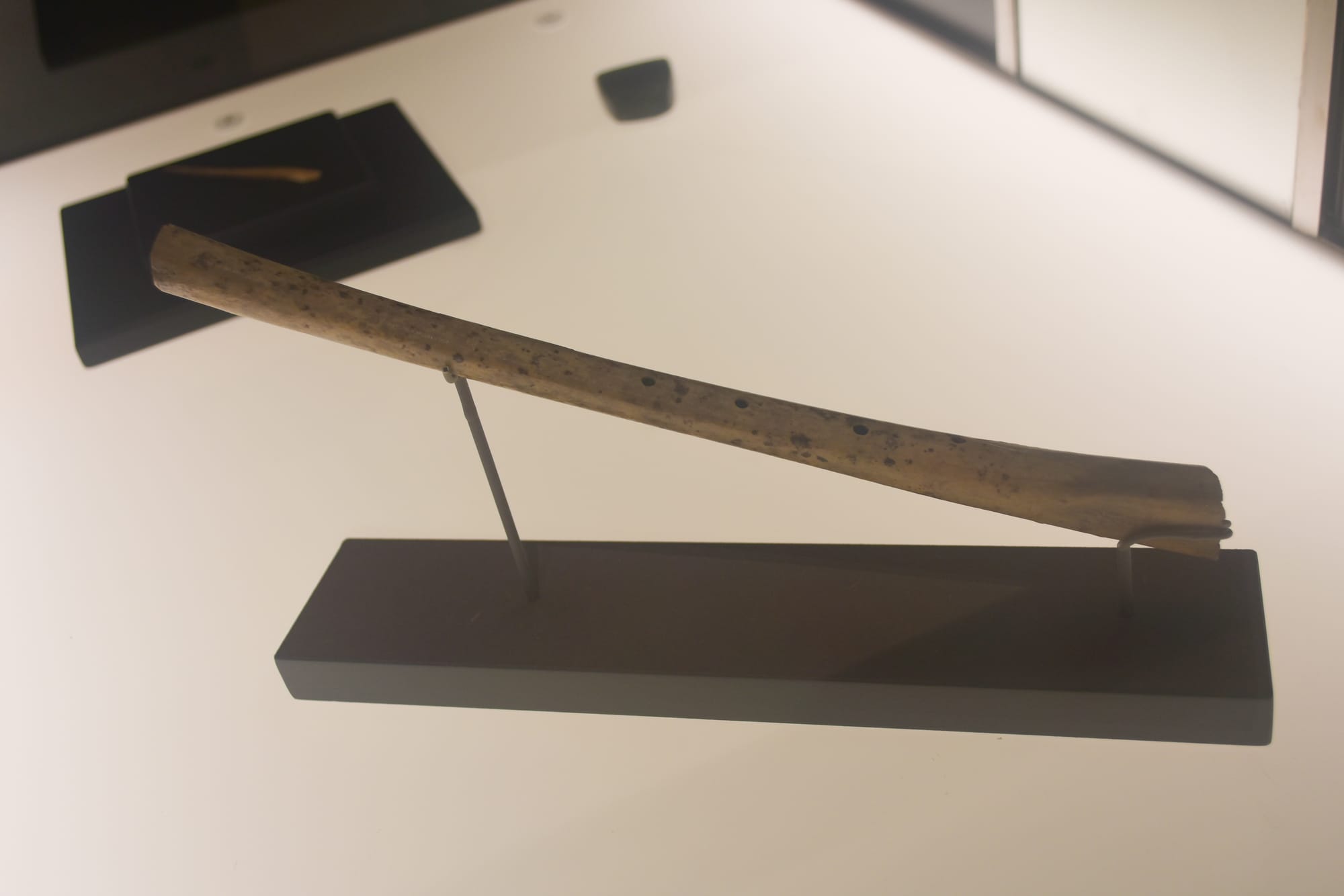
On 22 October 2026, Türkiye's Minister of Culture and Tourism, Mehmet Nuri Ersoy, announced on X two finds from the 2026 excavation season at Troy: a bone flute of about 2,800 years and a human-shaped idol head of 4,500 years. The work was carried out with ministry permission and support, under the Heritage for the Future project.
The flute is the headline. Ersoy called it the first and only musical instrument found in more than 160 years of excavation at Troy. He said it gives direct archaeological evidence of musical culture at the site.
A flute from the Archaic Period
According to Ersoy's post, the flute belongs to the Archaic Period. Arkeonews, which reported the announcement on 22 October, says it came from an Archaic-period settlement deposit and reportedly preserves its head section attached to its body. Hürriyet Daily News, on 23 October, dated it to the Archaic Period, approximately 750–480 B.C. The minister's own post says only Archaic Period and about 2,800 years.
Both reports stress how unusual the survival is. Arkeonews notes that instruments made from organic materials decay easily, which makes any that survive valuable. Hürriyet says the survival of such instruments is particularly rare. Hürriyet adds that researchers can use the preserved head section to assess the flute's structure and function.
The first-in-160-years claim comes from Ersoy's announcement. Arkeonews states it as fact in its headline and opening, then attributes it in the body with the words "According to Minister Ersoy". A record that long is a large thing to rest on a social-media post.
What the flute does and doesn't tell us
Hürriyet says wind instruments, including panpipes known as the syrinx, were used in the ancient world, and that some were associated with the cult of Dionysus and related rituals. It does not link this flute to that cult.
Arkeonews is explicit on the point. In its 22 October report, it said the circumstances in which Troy's flute was played remained unknown, and that no direct connection to a particular ceremony or cult had yet been established. Anyone reading a Dionysian ritual into the find is going further than either report does.
The idol head at Troy II
The second find is older by more than a millennium and a half. Ersoy's post says the idol head was found around the city gate of Troy II, and Arkeonews describes Troy II as one of the settlement phases of the Early Bronze Age. Hürriyet dates the head to the Early Bronze Age (third millennium B.C.). The minister's post gives 4,500 years and links it to the Early Bronze Age.
Hürriyet describes small human-shaped idols as characteristic finds from third-millennium B.C. western Anatolia. It says similar examples from Troy and other regional settlements help researchers study how they were made and used, and how cultures interacted.
Arkeonews adds a caution. It says researchers still disagree about what such idols were for: perhaps religious belief, perhaps representing individuals, perhaps some other symbolic role. The spot near the gate gives a context for further work, Arkeonews says, but it is not yet known whether the head first belonged to a house, a ceremony or some other setting.
What it adds up to
Troy is best known for the Trojan War and Homer's Iliad. Arkeonews says these finds draw attention instead to everyday life, artistic expression and cultural traditions. Troy has been a UNESCO World Heritage Site since 1998, according to Arkeonews.
A flute that is both Archaic and rare is a good find. The best-supported version of the story is the modest one: a bone flute, reportedly with its head section still attached, turned up at a site that has been dug for a long time. Both reports pass on the first-instrument claim. Hürriyet states it in its own words, in a report of Ersoy's announcement; Arkeonews does the same in its headline and opening, and credits it to the minister only further down. Neither report says what it was used for, or by whom.
Sources
Arkeonews (2026) 'Troy's First Musical Instrument Discovered Alongside 4,500-Year-Old Idol Head', Arkeonews, by Oguz Buyukyildirim, 22 October 2026, available at: https://arkeonews.net/troys-first-musical-instrument-discovered-alongside-4500-year-old-idol-head/ (Accessed: 25 October 2026).
Ersoy, M.N. (2026) 'Troya'nın binlerce yıllık kültür ve sanat tarihine iki yeni keşifle katkı sunuyoruz', X (@MehmetNuriErsoy), 22 October 2026, available at: https://x.com/MehmetNuriErsoy/status/2113163727146983643 (Accessed: 25 October 2026).
Hürriyet Daily News (2026) '2,800-year-old bone flute found at Troy, the first in 160 years', Hürriyet Daily News, 23 October 2026, available at: https://www.hurriyetdailynews.com/2-800-year-old-bone-flute-found-at-troy-the-first-in-160-years-228492 (Accessed: 25 October 2026).
Picture credits
- Top picture: A Neolithic bone flute, about 6200–5300 BC, from Sang-i Chakmak, Semnán (Iran), shown in the exhibition Irán, cuna de civilizaciones at the MARQ. It is not the Troy find. Image: Bone flute (Neolithic, MARQ): Dorieo, CC BY-SA 4.0, via Wikimedia Commons
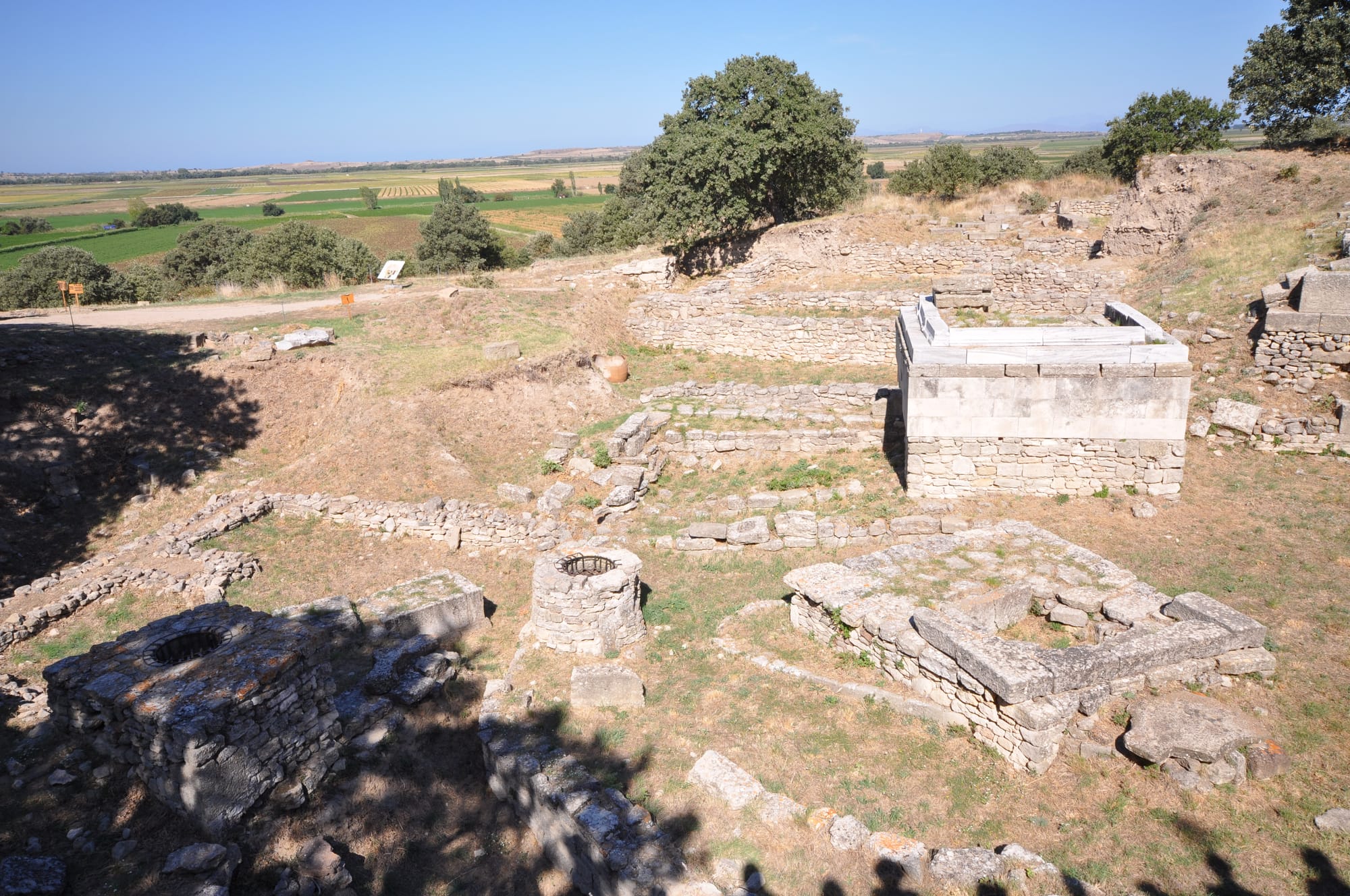
- The archaeological site of Troy at Hisarlık, Çanakkale. Image: Troy archaeological site, Hisarlık, Çanakkale, Türkiye — Jorge Láscar, CC BY 2.0 (via Wikimedia Commons)

