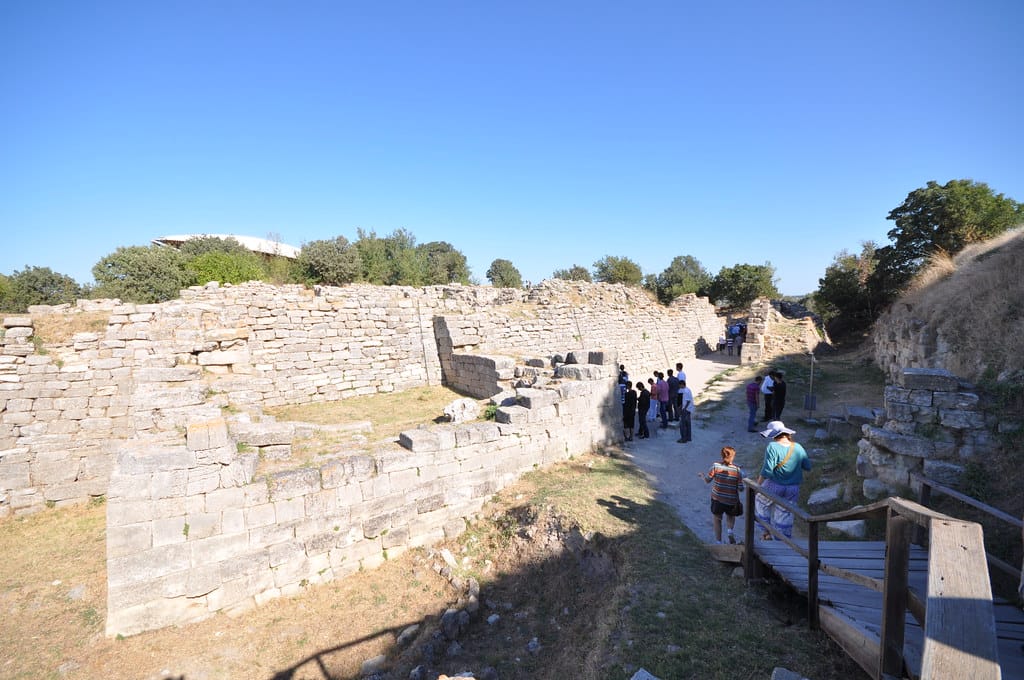
Above: The archaeological site of Troy, where the dig is taking place. (Photo: Jorge Láscar, CC BY 2.0)
Troy is a UNESCO World Heritage Site, listed in 1998. A dig there is now uncovering what the Turkish news agency DHA calls the city's 2,800-year-old agora. The excavators' account of it runs against a familiar picture, in which a Bronze Age city falls and the site goes quiet. In their telling, the market square did not go quiet for long.
What the dig says it has found
The work is led by Prof. Rüstem Aslan, head of the Troy Excavations Committee. It runs with the permission of Türkiye's Ministry of Culture and Tourism, coordinated by Çanakkale Onsekiz Mart University (ÇOMÜ), according to DHA's report, which TRT Haber ran on 10 September 2026.
The spokesperson was Prof. Reyhan Körpe, a member of ÇOMÜ's History Department and deputy head of the Troy excavations. Körpe placed the dig in front of the southern gate of Troy VI, the phase Archaeology Magazine describes as typically associated with the Trojan War. Körpe said the team has been working since 2014 to understand the link between Bronze Age Troy and the Archaic and Classical city of Ilion.
Körpe described an agora, a marketplace, that the team thinks dates to the Late Bronze Age. The claim that makes the headline is this one: after Bronze Age Troy was abandoned, settlers arrived roughly 80 to 90 years later and revived the agora. Körpe's words, in the original Turkish, were: "Kazdığımız yer 'Troya'nın en eski agorasıdır' diyebiliriz". Our translation: we can say that the place we are digging is Troy's oldest agora.
The evidence Körpe describes
Körpe described the finds this way:
- Architecture. Part of the remains belonging to the agora's structures have been uncovered. Körpe said the finds show that sections of the Troy VI walls were reused in the early Archaic period, with houses built over them.
- Pottery. Amphorae and other pottery fragments found with the architectural remains were dated to the Early Iron Age.
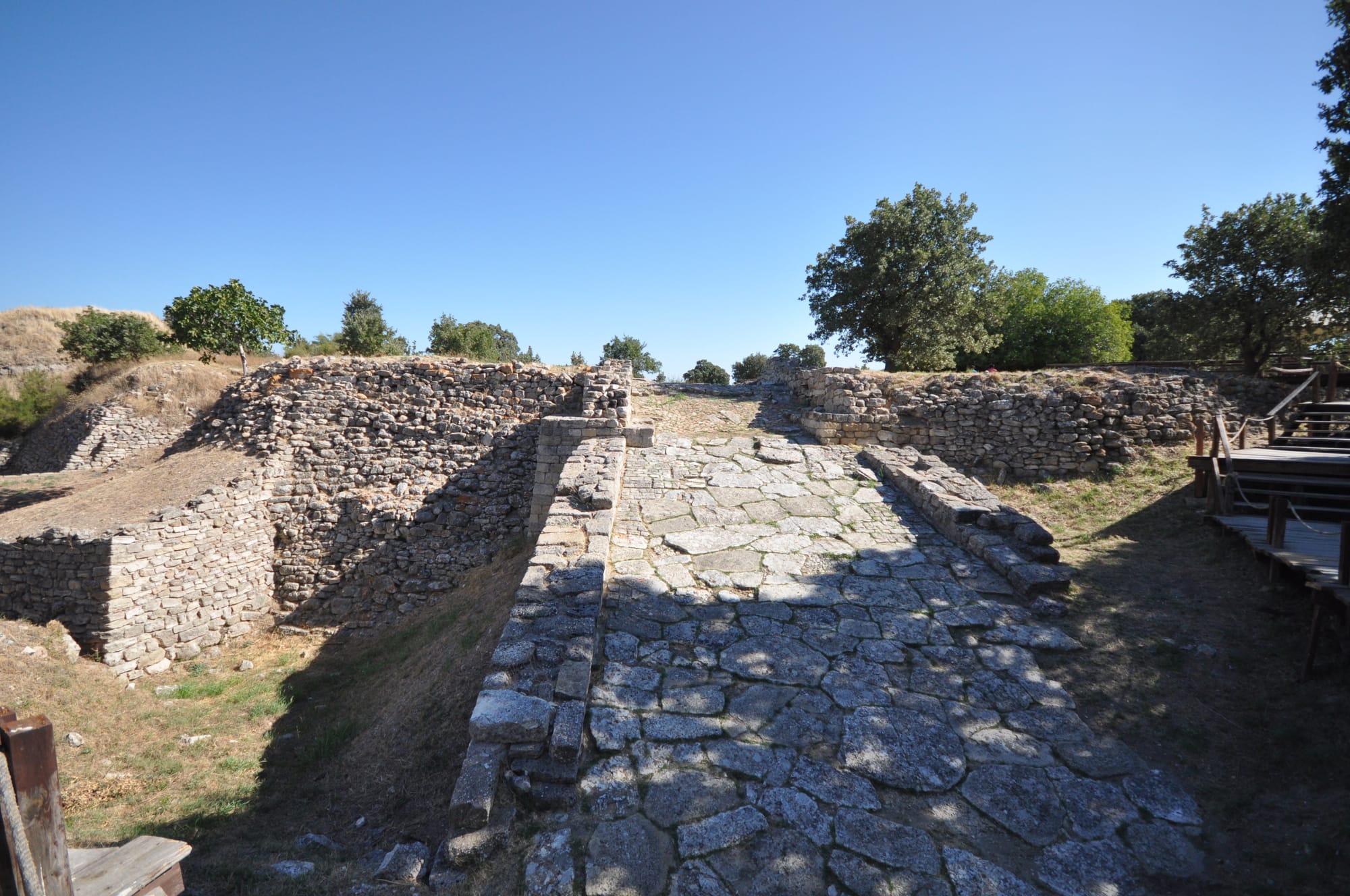
- A way in. In the work since 2014, the team had already exposed a paved road, an entrance, running from the lower city toward the southern gate. Körpe said they had found the agora in that work too.
From this, Körpe concluded that Troy was not left empty for long after the Bronze Age. The newcomers, Körpe said, appear to have built their houses on top of the old remains, perhaps on the old walls. They named the new settlement Ilios/Ilion, which Körpe described as a way of keeping the old city's name alive. Körpe added that the place had been known in the past as Wilusa.
Körpe also said the excavations Heinrich Schliemann began at Troy damaged many parts of the site, and that the current team digs a much narrower area in far more detail. Körpe said the digging will continue in the coming years.
The numbers don't line up on their own
The agora is described as 2,800 years old, and it is also described as revived 80 to 90 years after Bronze Age Troy was abandoned. DHA's copy carries both figures, and neither is tied to the other anywhere in the text. Until the excavators publish a fuller chronology, treat them as two separate statements. Körpe's description of the 80-to-90-year gap and the "2,800 years" headline number are both on record, but they don't make a single tidy timeline.
The wording is also looser than the headline suggests. Körpe said the team thinks the original market dated to the Late Bronze Age. "Oldest agora" came with "we can say". "Revived" is Körpe's word, and it is not the same as "built".
My read
A Bronze Age marketplace that stayed in use, in one form or another, into the early Archaic world is a more interesting story than a city that fell and was forgotten. It is also a claim built on a deliberately narrow excavation area, pottery dating and reused walls, and the people making it are the excavators themselves, speaking to the press mid-dig. The case will rest on what they publish, and on whether that publication settles how the two dates fit together.
Sources
DHA (2026) 'Troya Antik Kenti'nde 2 bin 800 yıllık agora gün yüzüne çıkarılıyor', Demirören Haber Ajansı, 10 September 2026, available at: https://www.dha.com.tr/foto-galeri/troya-antik-kentinde-2-bin-800-yillik-agora-gun-yuzune-cikariliyor-2942460/1 (Accessed: 10 October 2026).
TRT Haber (2026) 'Troya Antik Kenti'nde 2 bin 800 yıllık agora gün yüzüne çıkıyor', TRT Haber, 10 September 2026, available at: https://www.trthaber.com/haber/kultur-sanat/troya-antik-kentinde-2-bin-800-yillik-agora-gun-yuzune-cikiyor-956438.html (Accessed: 10 October 2026).
Archaeology Magazine (2026) 'Troy's Earliest Agora Unearthed', Archaeology, 15 September 2026, available at: https://archaeology.org/news/2026/09/15/troys-earliest-agora-unearthed/ (Accessed: 10 October 2026).