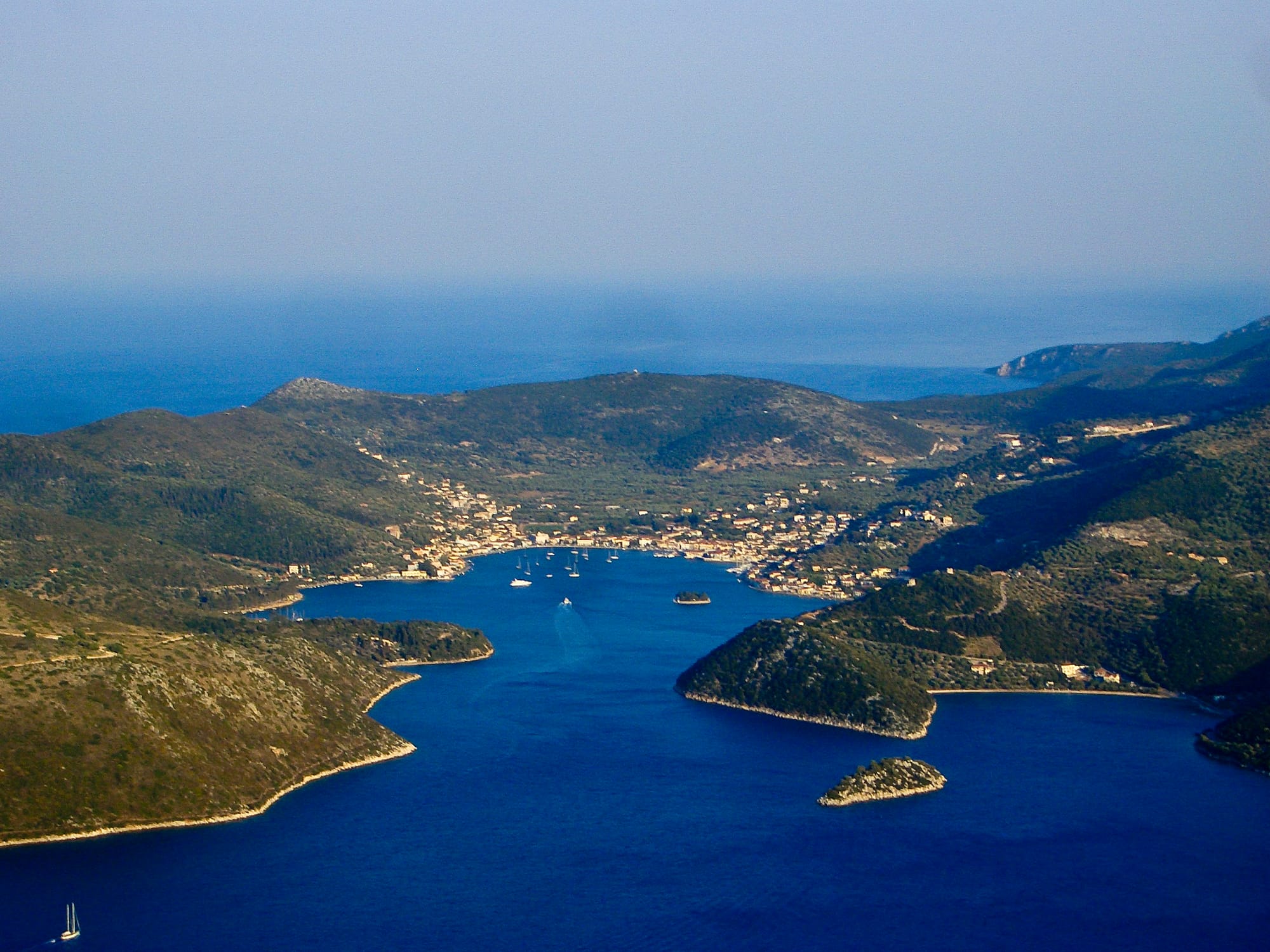
Ithaca is traditionally identified as the home of Odysseus. A site on its northern end, known as the School of Homer, is now set to become an organised visitor attraction. On 20 October 2026, Greece's Central Archaeological Council (KAS) gave a unanimous positive opinion on an updated study to open the site to visitors. The study also covers rainwater runoff.
The plan is essentially an archaeological park set among olive and other trees and dry-stone terraces. KAS had also recently approved the boundaries of the site.
What the plan involves
The wire says the study follows earlier suggestions from council members and from the competent departments of the Ministry of Culture, which proposed that the interventions be as gentle as possible. The aim is an experiential environmental trail. The figures below come from the wire, and Newsbomb gives the same ones.
- Entrance: the main entrance is set about 30 metres from the so-called Mycenaean spring. An earlier proposal had put it 6 metres away.
- Parking: the existing car park gets a discreet compacted-earth surface.
- Buildings: a 3 square metre guard post at the entrance and an 8 square metre restroom, which will also serve visitors with disabilities.
- Path: a natural-earth path will follow the natural route and use the site's two entrances and exits. A route with a suitable gradient is planned for visitors with disabilities.
- Furnishings: two benches, each 1.80 metres long and 45 centimetres high, at the entrance and at the highest point of the route, plus four information panels. Newsbomb says the benches are wooden.
The wire reports that it was said at the meeting that the interventions do not change the site and only make it more accessible and better cared for. It adds that they are the gentlest that can be done at this stage because the site has not been adequately investigated archaeologically, so excavations would have to come before it is fully presented.
Dimocracy.gr reported the mayor of Ithaca, Dionysis Stanitsas, expressing satisfaction. He said the enhancement ensures care and promotion of the island's cultural heritage while keeping open the possibility of future archaeological research.
What is known about the site
To Vima, which draws on the Culture Ministry's account of the site, gives more background than the wire. According to To Vima, the site has been called the School of Homer since the early 19th century. It lies on the eastern slopes of Mount Exogi in an area rich in springs. Two terraces joined by rock-cut stairways hold the excavated remains. These include a Hellenistic tower that To Vima dates to the third century BC and a large rectangular building on the lower terrace.
To Vima says the site was systematically excavated before a University of Ioannina research programme continued documenting and interpreting the finds. In To Vima's account, the ministry dates pottery fragments from the site to the late 14th and 13th centuries BC, and To Vima calls it a Mycenaean settlement. The ministry also traces evidence of human activity there back to the Late Neolithic.
The Odysseus question
To Vima notes that the site is popularly described as the Palace of Odysseus. It reports that professor emeritus Athanasios Papadopoulos publicly proposed that the fortified site could be identified with the palace of Odysseus and Penelope, while qualifying that reading in light of the evidence. Its own wording is that the identification remains a hypothesis rather than an established archaeological fact.
To Vima also notes that the debate is long-running and cites one position in it: the German archaeologist Wilhelm Dörpfeld, who worked with Heinrich Schliemann at Troy, argued that Homeric Ithaca was in fact the nearby island of Lefkada. It adds that continuing investigation at Agios Athanasios, the site's placename, brings evidence to the discussion but does not by itself settle where Homer's kingdom lay.
Why the timing draws attention
To Vima notes that the plans come as Ithaca draws renewed international interest after Christopher Nolan's film The Odyssey. According to To Vima, the film was released in July 2026 and had taken more than $1.6 billion worldwide by September.
In my view, what KAS approved (a path and an accessible route, a compacted-earth surface for the existing car park, a guard post, a restroom, two benches, four signs and rainwater-runoff works) is a long way from a dig. A palace identification remains a hypothesis, and the people who would test it are the excavators, not the signage.
Sources
Dimocracy.gr (2026) 'Δήμος Ιθάκης: Το ΚΑΣ ενέκρινε τη μελέτη για την ανάδειξη της «Σχολής Ομήρου»', dimocracy.gr, 21 October 2026, available at: https://www.dimocracy.gr/dimoi/dimos-ithakis-to-kas-enekrine-ti-meleti-gia-tin-anadeixi-tis-scholis-omirou/ (Accessed: 30 October 2026).
ΑΠΕ-ΜΠΕ (2026) 'ΚΑΣ: «Ναι» στη μελέτη διαμόρφωσης ως επισκέψιμου του αρχαιολογικού χώρου Αγίου Αθανασίου Ιθάκης', ekirikas.com, 21 October 2026, available at: https://www.ekirikas.com/kas-nai-sti-meleti-diamorfosis-os-ep/ (Accessed: 30 October 2026).
Newsbomb (2026) 'Ιθάκη: «Πράσινο φως» για επισκέψιμο αρχαιολογικό πάρκο στη Σχολή Ομήρου', Newsbomb, 21 October 2026, available at: https://www.newsbomb.gr/politismos/story/1771300/ithaki-prasino-fos-gia-episkepsimo-arxaiologiko-parko-sti-sxoli-omirou (Accessed: 30 October 2026).
To Vima (2026) 'Ithaca to Develop Archaeological Park at Site Linked to Odysseus', tovima.com, 22 October 2026, available at: https://www.tovima.com/culture/ithaca-to-develop-archaeological-park-at-site-linked-to-odysseus/ (Accessed: 30 October 2026).
Picture credits
- Top picture: Ithaca, traditionally identified as the home of Odysseus in Homer's epic. Photo: auteur, Wikimedia Commons (CC BY-SA 2.0)
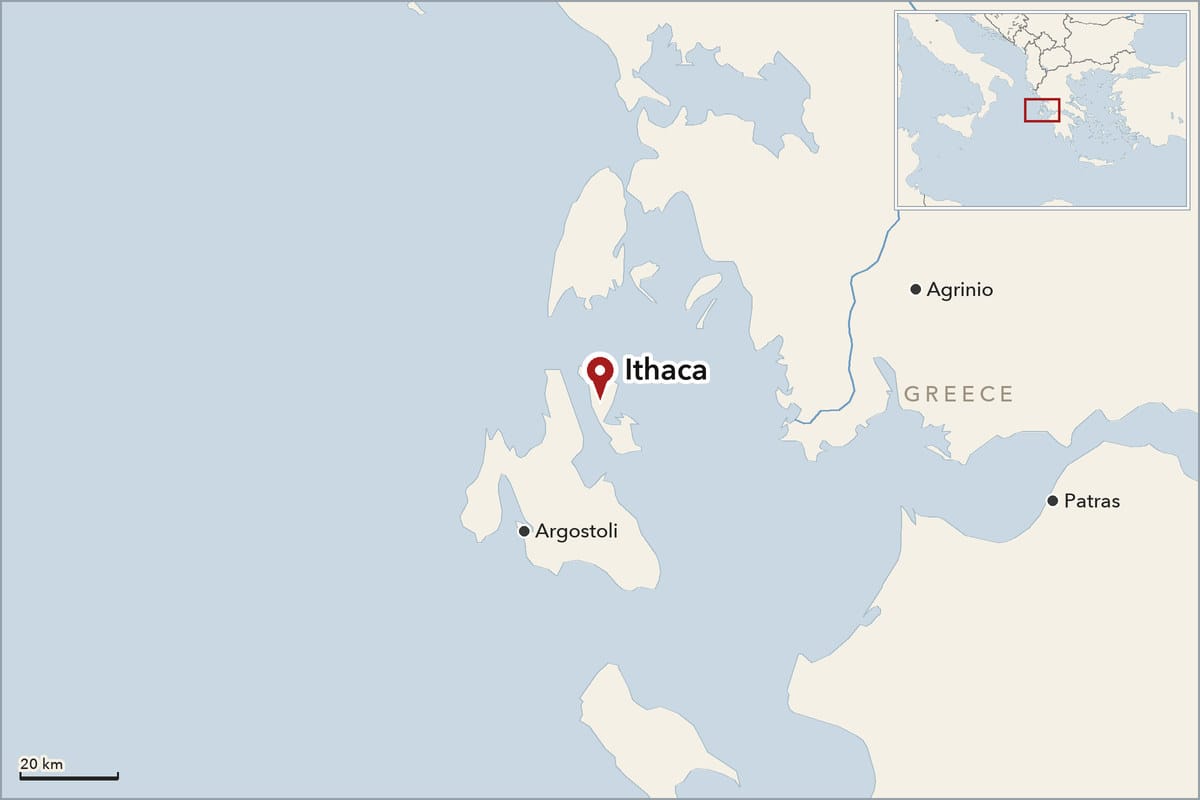
- Map: drawn from Natural Earth (public domain) and Wikidata.
