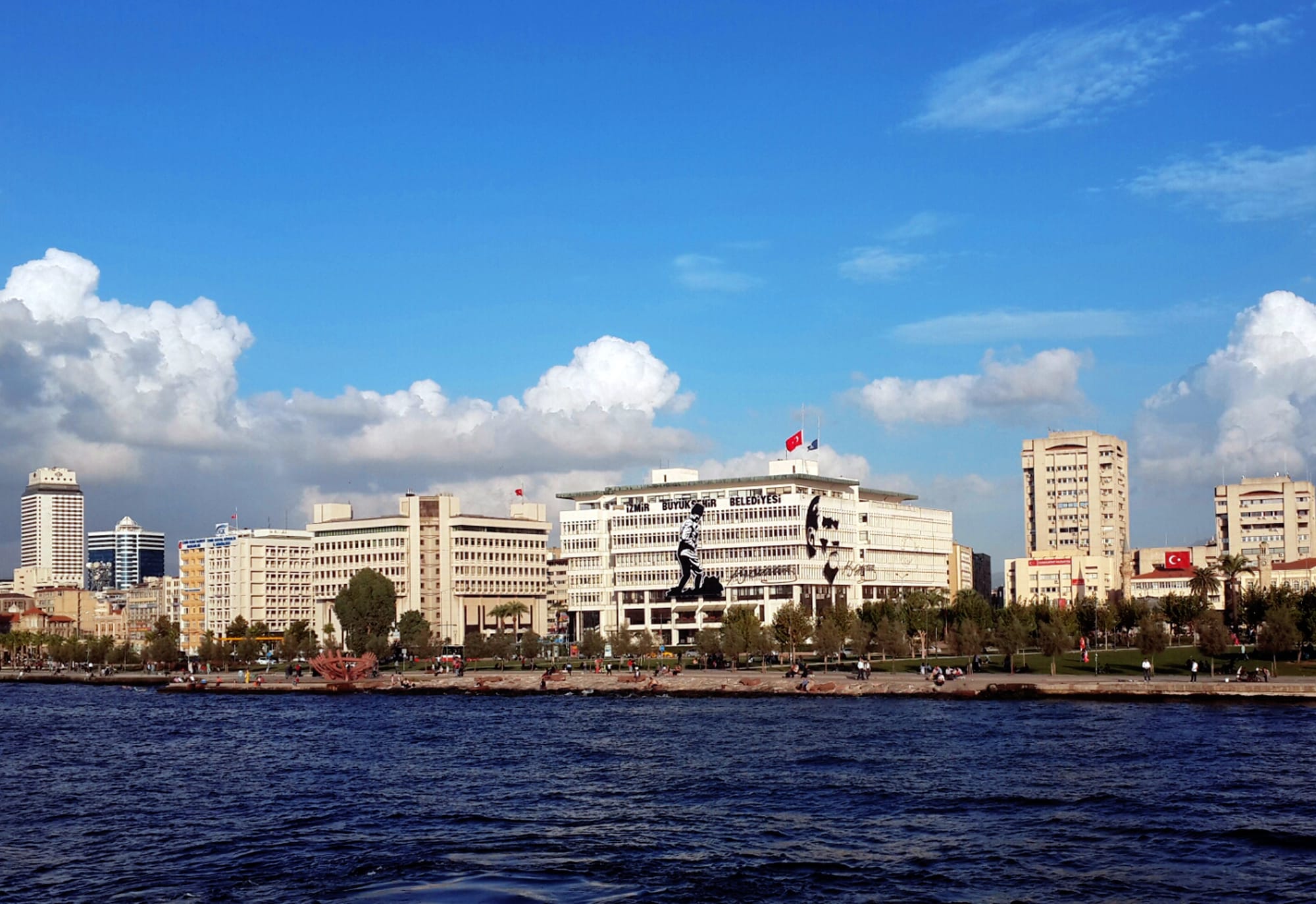
A marble head of Zeus, believed to date to the Roman period and to be about 2,000 years old, was seized in İzmir province, western Türkiye, and three suspects were detained, authorities said. Daily Sabah, citing the Anadolu Agency (AA), reported the seizure on 21 October 2026.
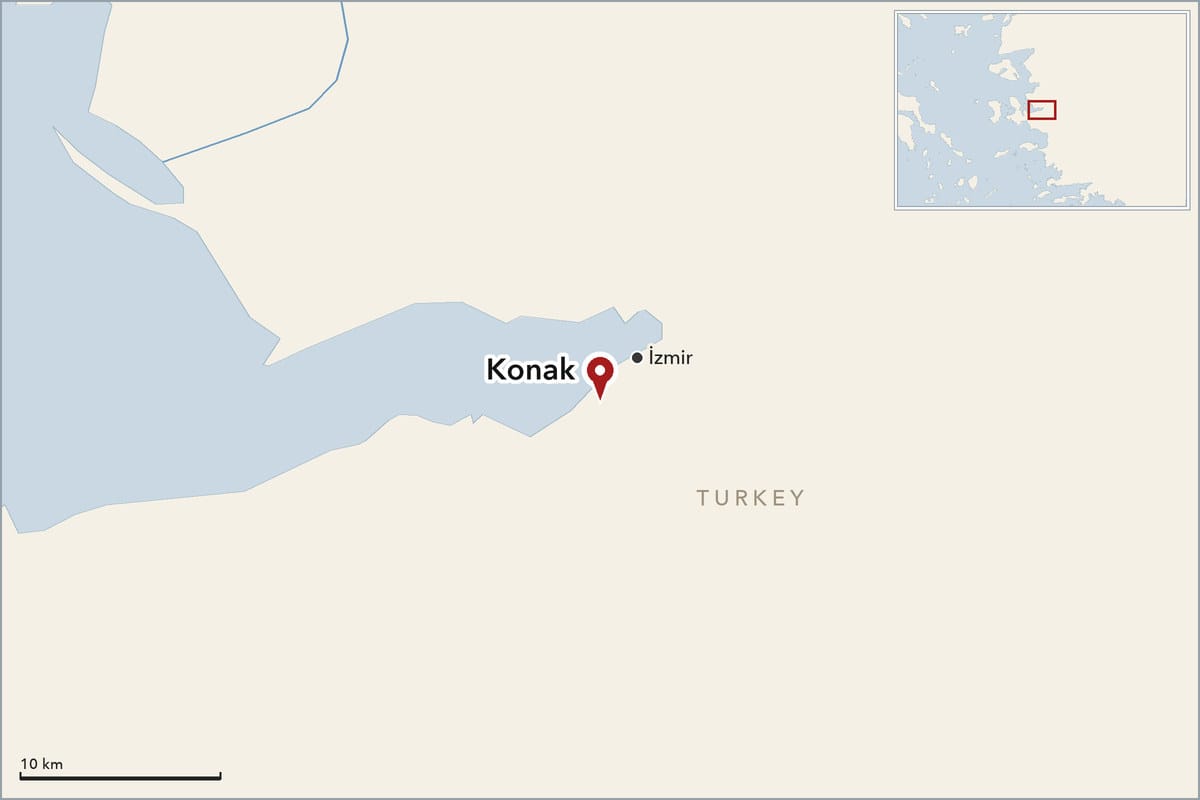
What the reports say happened
According to Daily Sabah and AA, an operation against the smuggling of historical artefacts was carried out by teams from the İzmir Police Department's anti-smuggling and intelligence units, under the coordination of the İzmir Chief Public Prosecutor's Office. The news agency Xinhua reported, citing the provincial security directorate, that police confiscated the head during an operation in the Konak district on Tuesday.
Reports differ on where in Konak the head turned up. Daily Sabah and the local paper Yeni Asır describe a raid at a designated address. The İHA news agency copy, as carried by Aydın Denge, says it was found in searches of a car, after police received information about historical-artefact smuggling in Konak.
Protected status and the detentions
Ekran Haber reported that examination of the head determined it to be a cultural asset requiring protection under Law No. 2863, the Law on the Conservation of Cultural and Natural Property. Xinhua, citing the Demirören News Agency, likewise said it was confirmed to be a protected cultural asset.
Ekran Haber reported that the three suspects were detained for the offence of violating that law. Anatolian Archaeology gave the same grounds, suspicion of violating Law No. 2863. Aydın Denge, carrying İHA's copy, reported on 21 October that the suspects' processing at the police station was continuing.
How firm is "2,000 years old"?
Most reports present the dating as a belief or an assessment rather than an established finding, though the İHA copy carried by Aydın Denge says the head was determined to belong to the Roman period. Daily Sabah wrote that the head is believed to date back about 2,000 years to the Roman period, and Ekran Haber and Yeni Asır used the word assessed. Anatolian Archaeology, on 21 October, noted that authorities had not publicly provided a detailed stylistic analysis or a more precise chronological assessment. It added that the head's original dimensions, its sculptural context and any relationship to a larger statue had not been established in the reports available to it.
Where did it come from?
Anatolian Archaeology stated on 21 October that the head's original archaeological provenance remained unknown. Seizure in İzmir does not, it says, establish that the head was produced, displayed or excavated in the surrounding region. It also says that without a documented findspot, researchers cannot confidently associate the head with a particular ancient city, sanctuary or building. It says establishing the origin would require further examination, potentially including comparisons with securely dated sculptures and investigation of the head's ownership history.
The same outlet makes a broader point about illicit antiquities: even when an object is recovered, losing its archaeological context can substantially reduce its scientific value. A police seizure is a result for law enforcement. Anatolian Archaeology's account suggests that what the head can tell archaeologists depends on questions the reports had not answered as of 21 October.
Separate seizures at the Greek border
Xinhua bundled the İzmir case with separate seizures at the border. It reported that customs enforcement teams seized a total of 7,160 historical artefacts in two operations at border crossings with Greece in Edirne province, as announced by the Trade Ministry.
At the Ipsala crossing, Xinhua said, an X-ray scan and search of a Greece-bound lorry uncovered 5,935 cultural artefacts hidden in a food and equipment cabinet in the trailer: 5,685 coins, 130 arrowheads, 100 rings and 20 miscellaneous accessories. At the Kapikule crossing, officials found another 1,225 undeclared coins in another Greece-bound lorry. Xinhua reported that the Trade Ministry said judicial investigations into the cases were under way.
Sources
Anatolian Archaeology (Carola, E.) (2026) '2,000-Year-Old Marble Head of Zeus Seized in Western Türkiye', Anatolian Archaeology, 21 October 2026, available at: https://www.anatolianarchaeology.net/2000-year-old-marble-head-of-zeus-seized-in-western-turkiye/ (Accessed: 22 October 2026).
Aydın Denge Haber (2026) '2 bin yıllık Zeus mermer heykel başı ele geçirildi', Aydın Denge Haber, 21 October 2026, available at: https://www.aydindenge.com.tr/izmir/21/10/2026/2-bin-yillik-zeus-mermer-heykel-basi-ele-gecirildi (Accessed: 22 October 2026).
Daily Sabah with AA (2026) '2,000-year-old marble head of Zeus seized in western Türkiye', Daily Sabah, 21 October 2026, available at: https://www.dailysabah.com/arts/2000-year-old-marble-head-of-zeus-seized-in-western-turkiye/news (Accessed: 22 October 2026).
Ekran Haber (2026) 'İzmir'de 2 bin yıllık Zeus heykel başı ele geçirildi: 3 gözaltı', Ekran Haber, 21 October 2026, available at: https://www.ekranhaber.com/yargi/izmirde-2-bin-yillik-zeus-heykel-basi-ele-gecirildi-3-gozalti-64977 (Accessed: 22 October 2026).
Xinhua (2026) 'Türkiye seizes 2,000-year-old Zeus head, over 7,100 artifacts', Xinhua, 21 October 2026, available at: https://english.news.cn/20261021/81f9876aee544258ad22de2f4aed9f51/c.html (Accessed: 22 October 2026).
Yeniasir (2026) 'Konak'ta 2 bin yıllık Zeus heykel başı ele geçirildi', Yeniasir, 22 October 2026, available at: https://www.yeniasir.com.tr/izmir/2026/10/22/konakta-2-bin-yillik-zeus-heykel-basi-ele-gecirildi (Accessed: 22 October 2026).
Picture credits
- Top picture: The Konak district of İzmir. Photo: 1508857 (source)
- Map: drawn from Natural Earth (public domain) and Wikidata.
