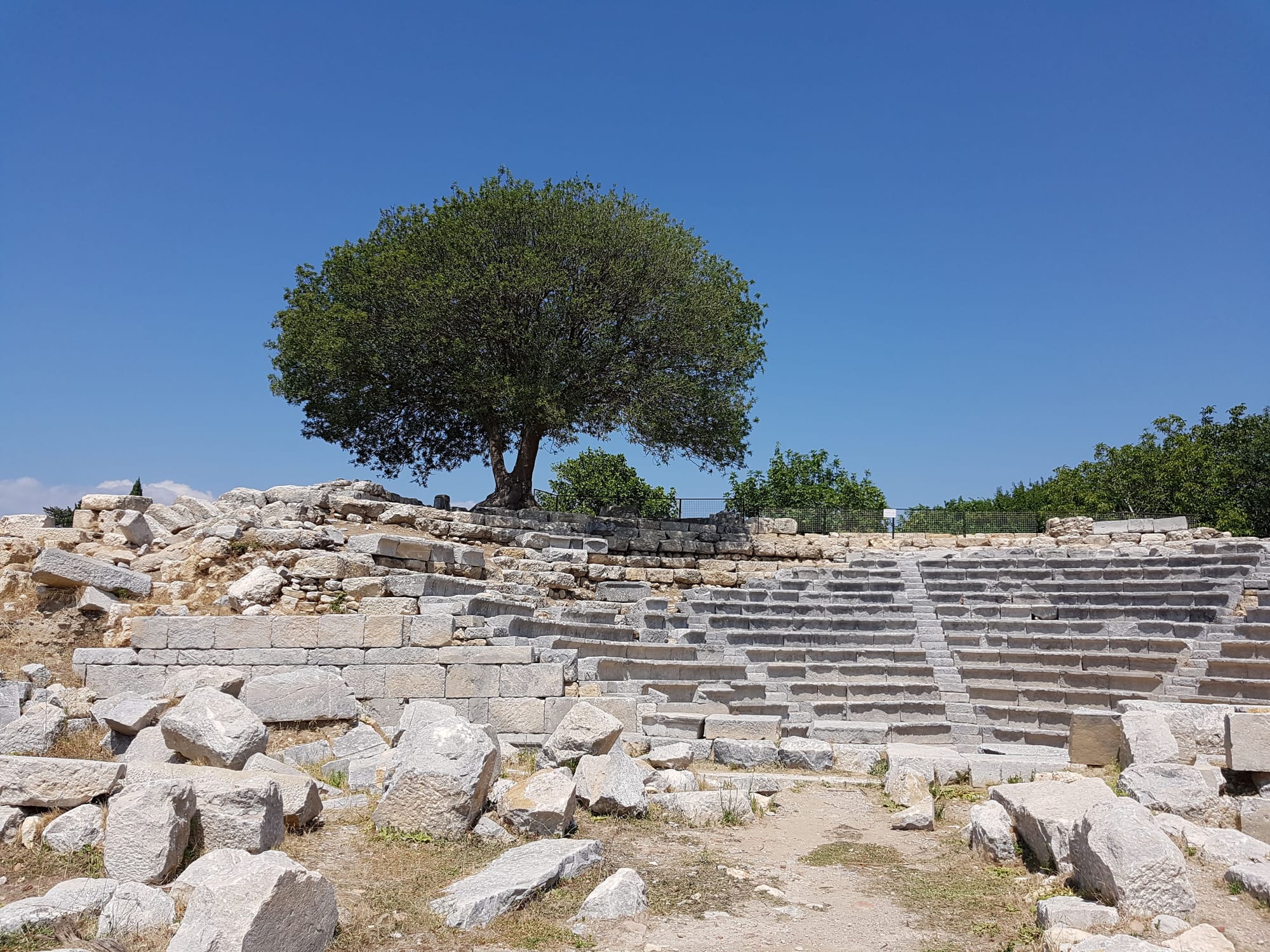
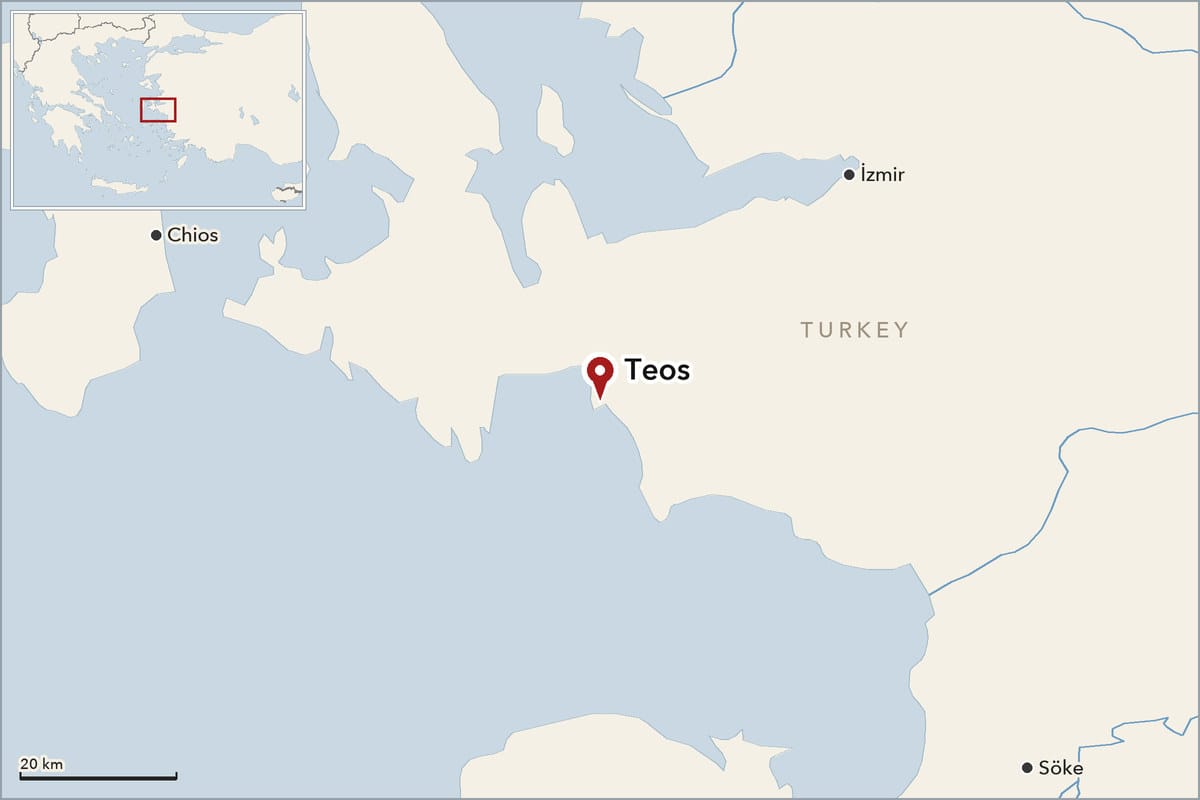
Inscriptions from the ancient city of Teos, near Seferihisar in İzmir Province, western Türkiye, set out how an education system was paid for and run about 2,200 years ago. According to excavation director Professor Musa Kadıoğlu of Ankara University, the best-paid teachers were the ones who taught stringed instruments.
Arkeonews says the educational records have been known to researchers for years. What is new this week is how the story is being told: salaries, exams and school governance are in the headlines, and a 2026 season of digging has added 13 more inscriptions to the city's file.
The money
Kadıoğlu, quoted by Yeni Asır, said the teachers' salaries are known and that the highest went to music teachers who taught stringed instruments.
Arkeonews gives the figures and attributes them to the excavation project's published account of the Polythros Gymnasium. That account identifies an annual payment of 700 drachmas for a music teacher. Three teachers responsible for reading, writing and literature received between 500 and 600 drachmas, and two athletic instructors received 500 drachmas each.
Arkeonews adds that the inscriptions document the differences but do not explain why music instruction commanded the highest payment. The stone gives the numbers and leaves the reasoning out, so any explanation of why music paid best is interpretation.
Who paid for the school
The system owed much to a donation. Arkeonews reports that a wealthy citizen named Polythros set up an educational foundation with 34,000 drachmas around 2,200 years ago, to help finance schooling for freeborn boys and girls. Arkeonews calls this a rare documentary record of how a Greek city organised and funded education during the Hellenistic period.
Yeni Asır quotes Kadıoğlu as saying that very few ancient cities are known to have education foundations of this kind, and that at Teos both girls and boys were educated.
According to both outlets, students studied reading, writing, grammar, literature and music, alongside physical education and military exercises. Arkeonews cautions that the inscriptions do not establish that every student received identical instruction.
The foundation also set out who decided what. Kadıoğlu says teachers took part in decisions about the subjects students would study, and that an administrator over the age of 40 could step in when the teaching staff disagreed.
Where the exams were held
Music and academic examinations took place in the bouleuterion, the city's council building. Kadıoğlu said the inscriptions state this plainly. For physical education and military training, he said the team thinks the exams were held in the gymnasium in the north of the city.
The building could hold about 800 people in 17 rows of seating, according to both outlets. Yeni Asır places it just north-west of the agora, and says a stage was added in the Roman period.
Both outlets describe how far the building has come since excavation resumed. Kadıoğlu says that when his team arrived in 2010, only the top two or three steps were visible. Arkeonews reports that much of the structure has since been exposed and major restoration completed. It says the work progressed substantially during 2026, allowing the council building to host cultural activities again.
What the 2026 season added
This year's work around the Temple of Roma and Augustus turned up new monument bases and architectural blocks reused in the foundations of a stone-paved square. Archaeologists identified 13 inscriptions on those blocks, which provide information about the city's earlier political and social relationships.
One of the 13 mentions Parmenion, described by Arkeonews as one of Alexander the Great's leading military commanders. Other texts record decisions about judges invited from Miletus, Smyrna and Mytilene to help settle public legal disputes in Teos. The Teians honoured the visiting judges and the communities that sent them, which Arkeonews takes as evidence of diplomatic and legal cooperation between neighbouring city-states.
Whose statues once stood on the new monument bases around the temple is unknown, according to Arkeonews, and Kadıoğlu is quoted by Yeni Asır saying the same.
The city and the project
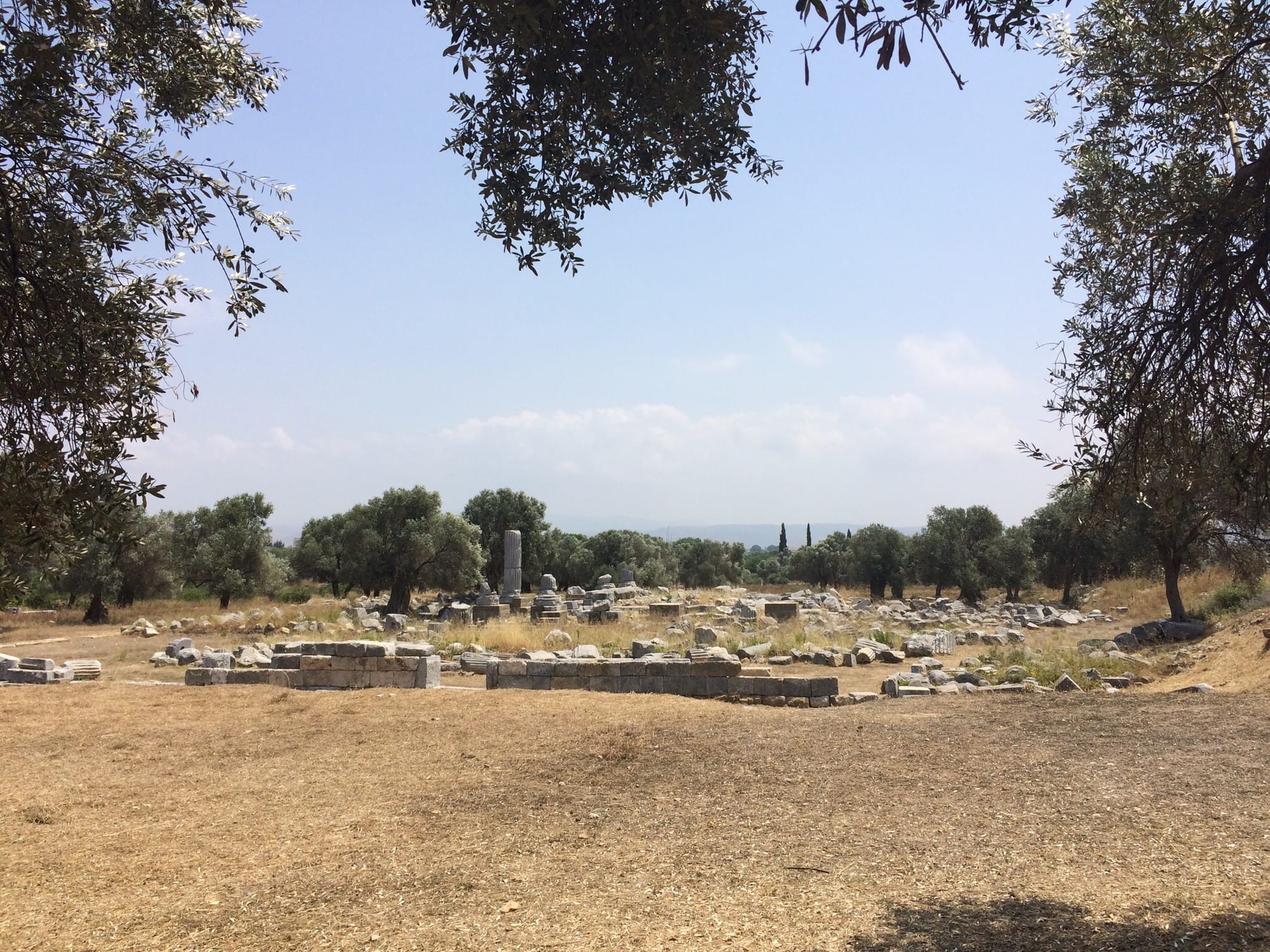
Teos was one of the twelve Ionian cities. Arkeonews describes it as an important centre of commerce and artistic activity, supported by two harbours, and the birthplace of the lyric poet Anacreon. It later became associated with a prominent organisation of Dionysian performers.
The excavation operates under the Turkish Ministry of Culture and Tourism and Ankara University, with financial support from İzmir Metropolitan Municipality. Both outlets say systematic work there dates from 2010.
Sources
Altuntaş, L. (2026) 'Forget Philosophy and Math, These Teachers Earned More in a Greek City 2,200 Years Ago', Arkeonews, 27 October 2026, available at: https://arkeonews.net/forget-philosophy-and-math-these-teachers-earned-more-in-a-greek-city-2200-years-ago/ (Accessed: 27 October 2026).
Yeni Asır (2026) 'İzmir'de 2 bin 200 yıllık sır! O zamanlar en yüksek maaşı kim alıyordu?', Yeniasir, 27 October 2026, available at: https://www.yeniasir.com.tr/izmir/2026/10/27/izmirde-2-bin-200-yillik-sir-o-zamanlar-en-yuksek-maasi-kim-aliyordu (Accessed: 27 October 2026).
Picture credits
- Top picture: The ancient council building at Teos. Photo: Isabeau, CC BY-SA 4.0, via Wikimedia Commons
- Ruins at the ancient city of Teos. Photo: Kadıköylü, CC BY-SA 4.0, via Wikimedia Commons
- Map: drawn from Natural Earth (public domain) and Wikidata.

