A journal article on the later Bronze Age peak sanctuary at Stelida on Naxos asks where a handful of black stones among its offerings came from. Its authors are Carter, Lipsett, Hall, Rizzuto and Athanasoulis, and it appears in Journal of Archaeological Science: Reports, Vol. 75, published by Elsevier, with a publication date of 1 November 2026. Tristan Carter, a professor of anthropology at McMaster University, is the associated expert listed on the university's record of the paper.
A Minoan-style shrine on an Aegean hill
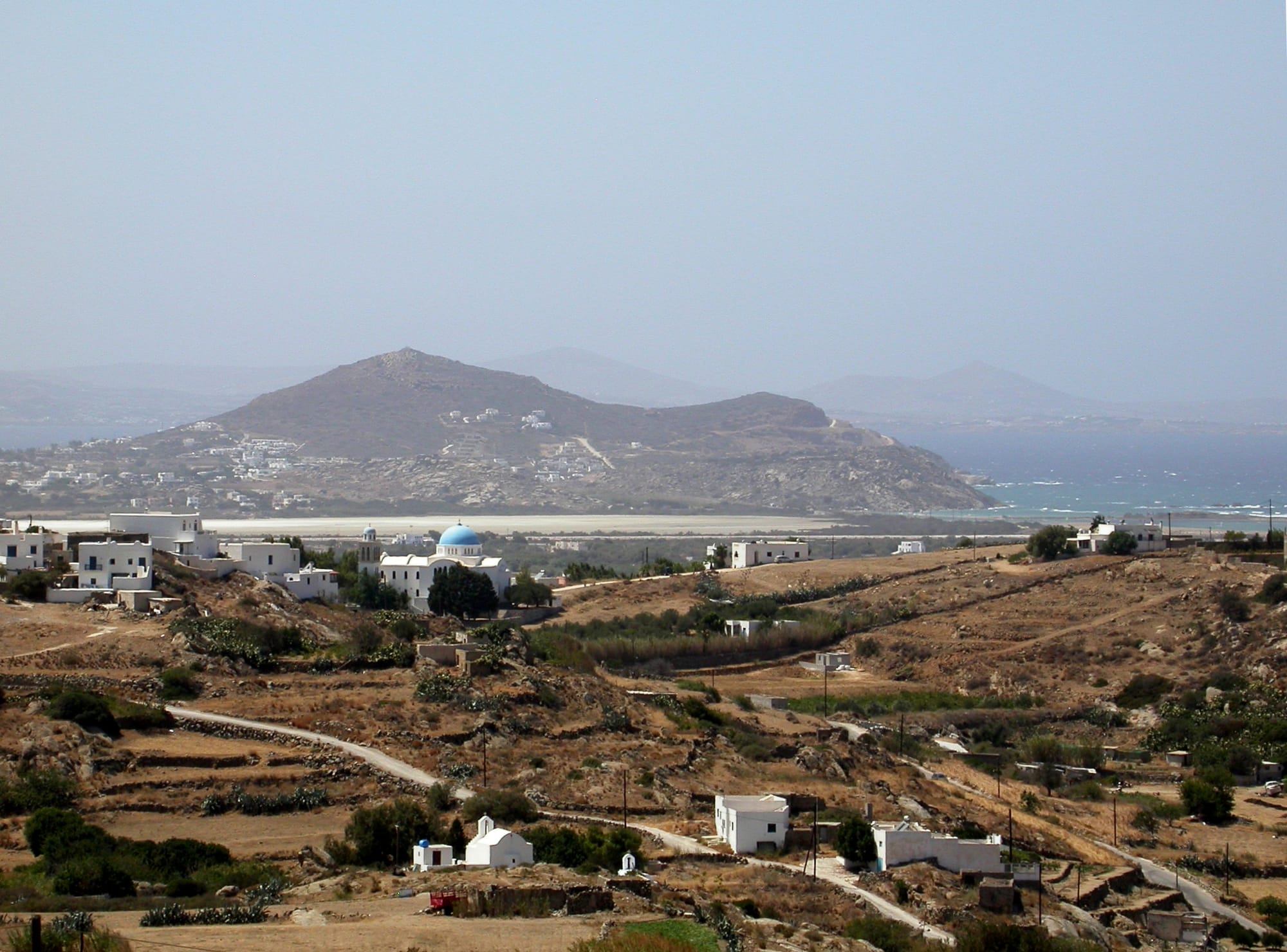
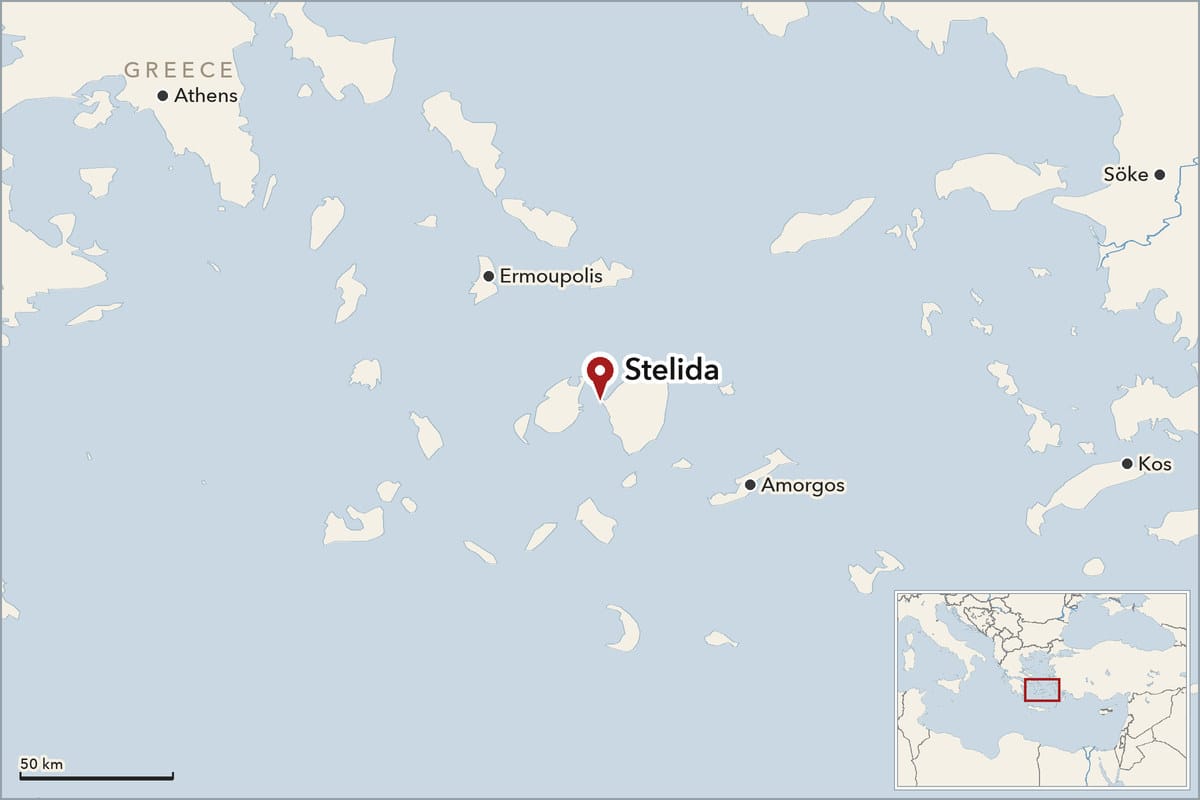
According to Greek Reporter, the sanctuary stands on Stelida, a hill overlooking the northwestern coast of Naxos, the largest island in the Cyclades. Greek Reporter says excavations in 2019 revealed a religious complex resembling the mountaintop sanctuaries of Minoan Crete, dating to approximately 1650 to 1400 B.C. and containing three buildings, an altar and a sacred standing stone. La Brújula Verde names the buildings as a main shrine, a workshop-chapel and a kitchen, with a wall around the whole complex. The same outlet adds that for more than 200,000 years Stelida had been a quarry of flint.
More than 10,000 pebbles
The study's abstract says water-worn pebbles were dedicated at many later Bronze Age peak sanctuaries of Minoan Crete and the Minoanized Aegean, Stelida among them. Most of the Stelida assemblage, which numbers 10,713, is locally available quartzite and granodiorite, with a few obsidian pebbles, a material foreign to Naxos. Greek Reporter describes the 10,713 pebbles as the largest collection documented at a Minoan-style sanctuary and says 15 are obsidian. La Brújula Verde likewise calls it the largest collection ever found at a Minoan place of worship.
La Brújula Verde reports that more than 80% of the pebbles are quartzite and granodiorite, both very common on Naxos, and that the obsidian pebbles amount to fewer than two in every thousand. It says the authors analysed the six that were available. Greek Reporter says that after the Thera eruption parts of the complex were rebuilt and thousands of previously deposited pebbles were buried near the main shrine; La Brújula Verde places them in a pit on the eastern terrace and reports that the authors' estimates put the eruption around 1561 BC. La Brújula Verde also reports that the pebbles are rounded and still covered with their natural outer skin, which shows they tumbled along a beach or riverbed, and that they are not lost tools.
Tracing the black glass
The team used portable X-ray fluorescence (XRF) spectrometry to characterise and source six of the obsidian artefacts, as part of a larger study using the pebbles to reconstruct Stelida's socio-religious sphere of influence. The analysis shows the pebbles all derive from Cycladic sources, five from Melos and one from Antiparos. Greek Reporter puts Melos at approximately 51 to 56 miles from Naxos and Antiparos at less than 19 miles.
La Brújula Verde reports that three of the Melian pebbles appear to match the Sta Nychia source and two the Dhemenegaki source, and that the results were compared with samples from Antiparos, Melos, the islet of Giali and two volcanoes in central Anatolia. The same outlet says the authors urge caution on the detail: the device had no calibration designed for obsidian, they had only three reference samples per source, and they measured curved pebble surfaces, so they are confident about the island of origin but less so about the specific quarry.
Melos expected, Antiparos a surprise
The abstract says it was unsurprising that most of the obsidian is Melian, since Melos was the region's main Bronze Age source and its major community, Phylakopi, was closely connected to Minoan Crete; it adds that the Stelida pottery likely includes Melian imports. Greek Reporter says Melian obsidian circulated widely through maritime trade networks. La Brújula Verde gives two examples: at Papadiokambos on Crete, 91 of the 92 pieces analysed were Melian, and in Franchthi Cave on the Peloponnese, Melian obsidian turns up in layers more than 10,000 years old, some of the earliest evidence of seafaring in Greece.
To the authors the Antiparos pebble was unexpected: it is the latest documented use of this obsidian, and the farthest travelled. Greek Reporter says obsidian from Antiparos rarely appears in archaeological records and that Stelida is the only documented instance of it reaching another island. La Brújula Verde adds that this obsidian comes from Soros hill in small chunks under 3 centimetres and was almost never used.
Pilgrims, sailors or a handful of beach?
The abstract says that, when the data are contextualised, it can be suggested the pebbles relate to the significance of seafaring and seafarers to Naxian late Bronze Age society and to the rituals at the peak sanctuary. Greek Reporter says researchers suggest worshippers may have collected handfuls of stones from beaches and carried them to Stelida as offerings, and that tiny seashells support this. La Brújula Verde names the shells as Columbella rustica, tiny inedible sea snails, some found inside the pits, and says the authors argue it is more likely that worshippers scooped up a handful of stones from a beach and left the lot at the shrine. The same outlet says the authors considered lucky charms and rejected the idea.
On where the pebbles lay, La Brújula Verde reports that two, including the Antiparos one, came from the workshop-chapel, and that three or four others turned up on the eastern terrace but were probably left earlier in the main shrine. Greek Reporter notes that pottery imported from Melos and Thera was recovered in that workshop-chapel. The setting matters too: Greek Reporter says Stelida overlooks Grotta, a major Bronze Age settlement and harbour on Naxos, and that its twin summits would have been a recognisable landmark for sailors. La Brújula Verde says the twin-peaked hill still works as a landmark for anyone approaching by sea.
What six stones can and cannot carry
The abstract itself says that while most Stelida pebbles are locally available raw materials, the obsidian study suggests the assemblage composition might be more complex, since many of these lithologies are documented elsewhere in the Cyclades. La Brújula Verde reports that the authors think isotope analysis would be needed to settle this, and that for now nobody knows whether the more than 10,000 stones came from a single beach or many. Greek Reporter likewise says further analysis could determine whether more of the pebbles came from beaches beyond Naxos. With six analysed stones out of 10,713, the seafaring reading rests on very little.
Naxos holds a prominent place in Greek mythology, Greek Reporter notes, particularly the story of Theseus and Ariadne. Researchers have considered whether the Stelida sanctuary might have been connected to Ariadne, Greek Reporter says, but no archaeological evidence has confirmed it. La Brújula Verde adds that the pebble study does not address it.
Sources
Carvajal, G. (2026) 'Beach Pebbles at a Minoan-Style Shrine on Theseus and Ariadne’s Island May Point to Ancient Sailors', La Brújula Verde, 2 November 2026, available at: https://www.labrujulaverde.com/en/2026/11/beach-pebbles-at-a-minoan-style-shrine-on-theseus-and-ariadnes-island-may-point-to-ancient-sailors/ (Accessed: 7 November 2026).
experts.mcmaster.ca (n.d.) 'Seafarers and the seashore: Sourcing obsidian...', experts.mcmaster.ca, available at: https://experts.mcmaster.ca/scholarly-works/3993678 (Accessed: 7 November 2026).
Zahid, N. (2026) '3,500-Year-Old Minoan-Style Shrine on Naxos Reveals Religious Links Between Greek Islands', GreekReporter.com, 2 November 2026, available at: https://greekreporter.com/2026/11/02/minoan-shrine-naxos-religious-links-greek-islands/ (Accessed: 7 November 2026).
Picture credits
- Top picture: An eastern view of the Stelida hill of Naxos, Greece. Image: Stelida hill, Naxos — Stepanps, CC BY-SA 4.0 (Wikimedia Commons)
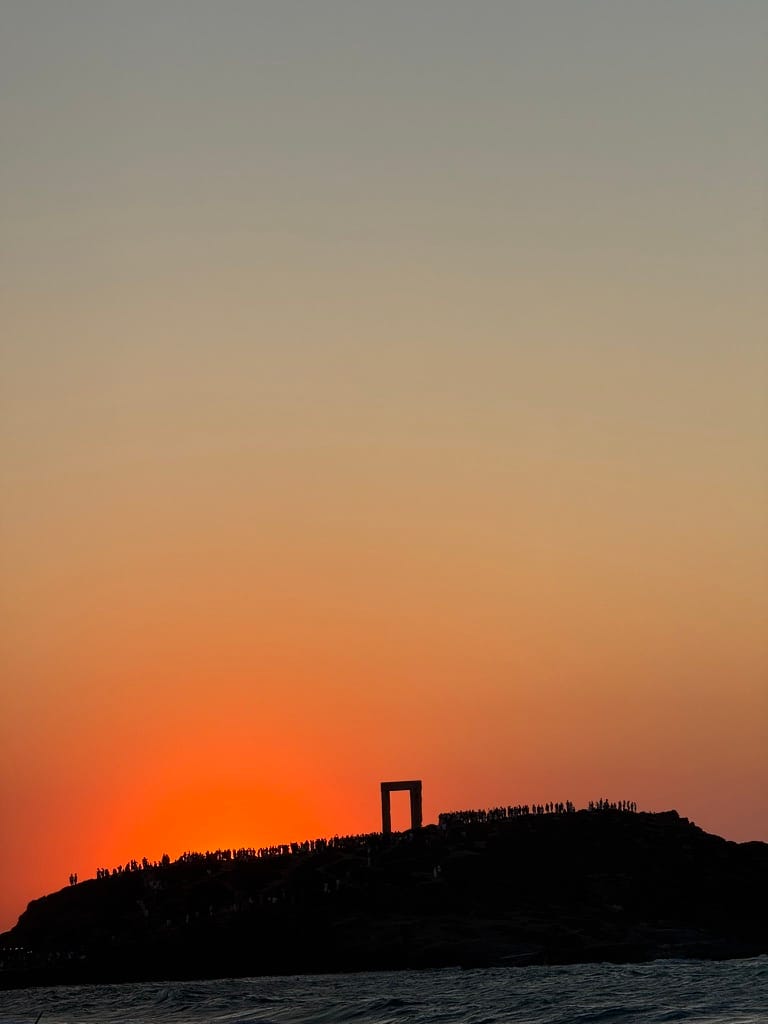
- Naxos, in the Cyclades. Image: Sunset Behind the Portara (Gate of the Temple of Apollo) of Naxos, by D Berki, CC BY 4.0 (source)
- Map: drawn from Natural Earth (public domain) and Wikidata.

