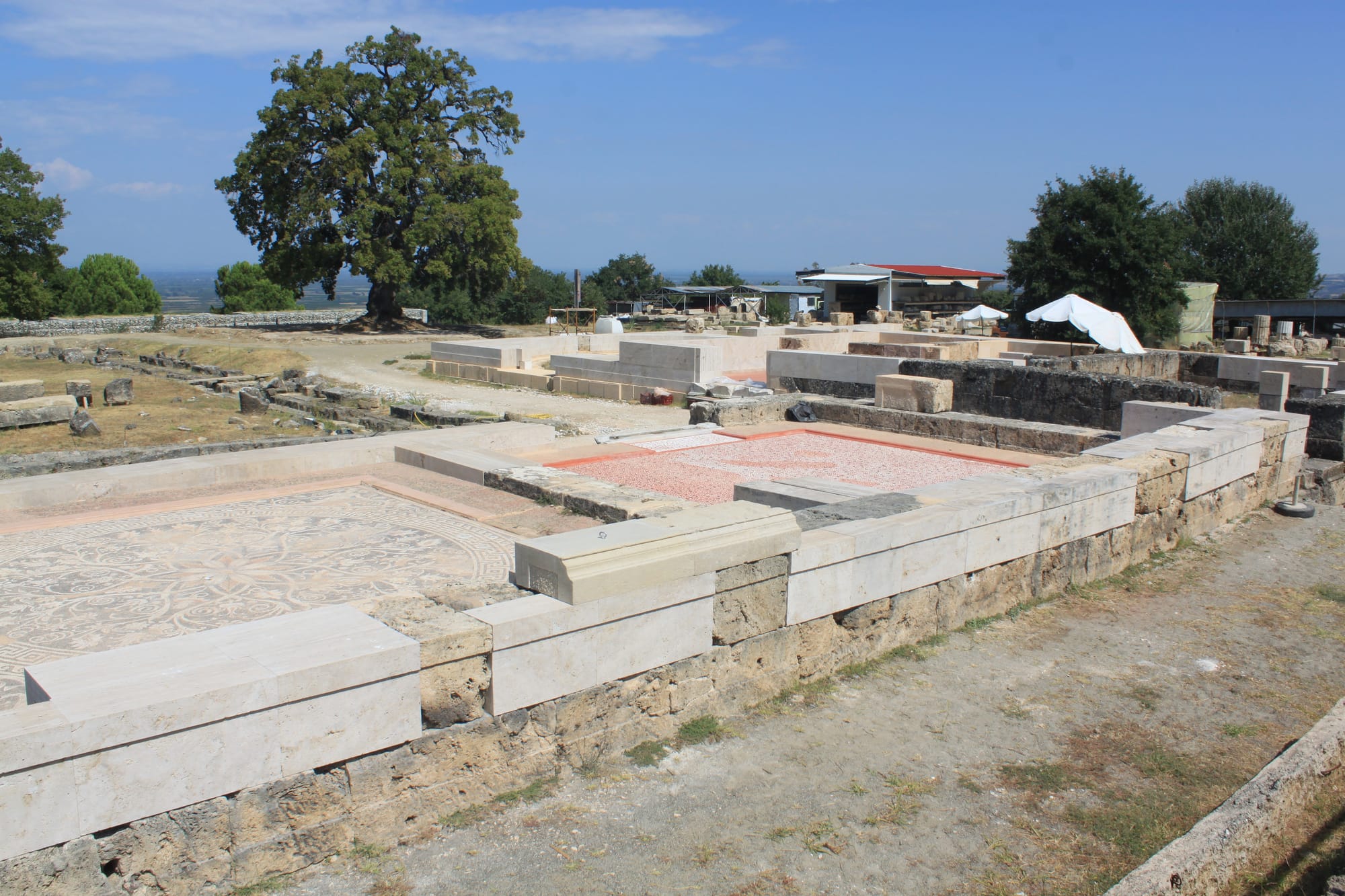
For decades, archaeologists tentatively identified a series of grottoes as part of the gymnasium where Aristotle taught Alexander the Great. Archaeologist Angeliki Kottaridi thought that answer was too small. According to the historian Sam Dalrymple, writing for National Geographic, she began two years ago to argue that the grottoes were only the tip of the iceberg, and that the real school lay under olive groves about two kilometres to the east. Her team has now excavated there. She argues that what they have uncovered is the Royal Gymnasium of Mieza.
The claim is Kottaridi's, and the dig is still young. But the structure she is uncovering is large, and it has been announced through official channels.
What the dig says it has found
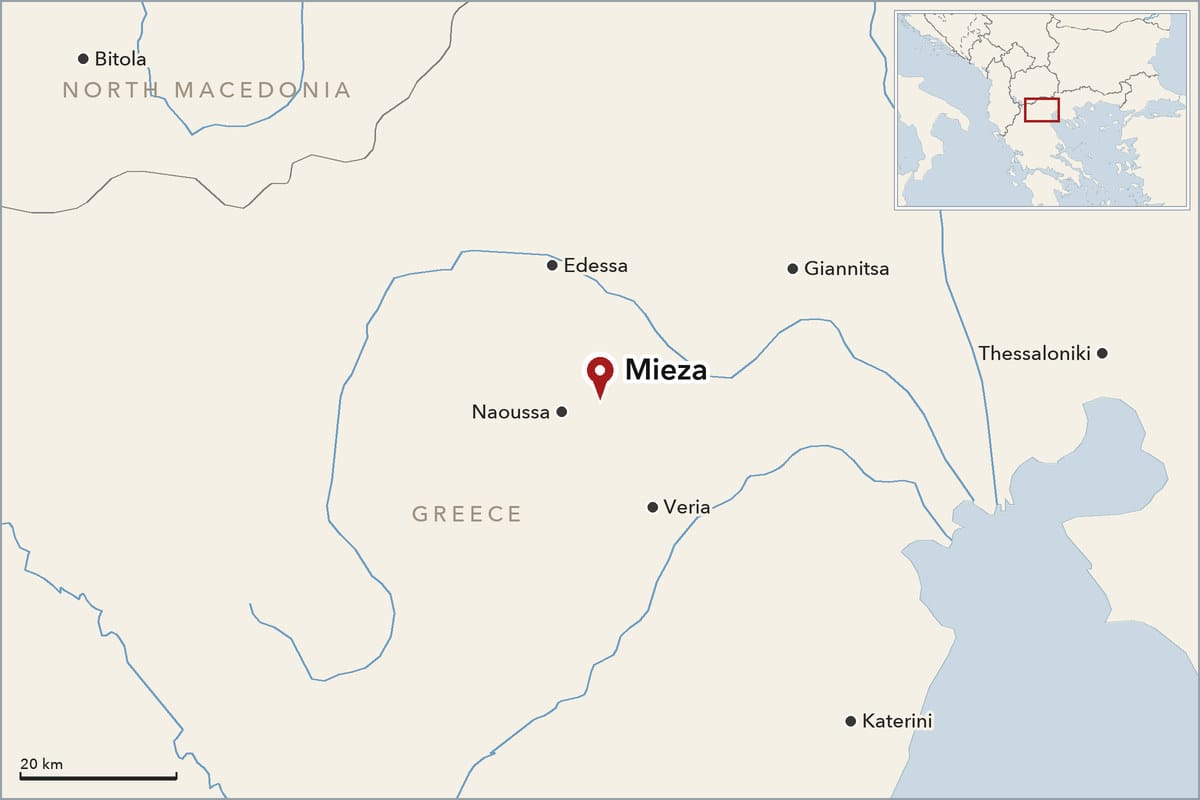
Excavations began in 2024 under Kottaridi, honorary curator of antiquities, as part of an agreement between Greece's Ministry of Culture and the Municipality of Naoussa. Newsbomb reported on 27 August 2025 that the ministry had announced the end of the first phase of the research. It said the agreement was signed on 7 August 2024 by Lina Mendoni and the mayor of Naoussa, Nikos Koutsogiannis. The work is run by the Ephorate of Antiquities of Imathia under Kottaridi's direction.
Greek City Times says the work began in 2024 on about 30 acres, and All That's Interesting says the excavations now cover 30 acres. The finds reported so far include:
- a palaestra, the wrestling and boxing area;
- a stadium and covered walkways;
- classrooms and a lecture room where, in Dalrymple's words, students may have studied;
- a roofed running track, or xystos, about 200 metres long;
- two banquet halls with raised platforms that would have held couches, which All That's Interesting says were likely used for socialising, including drinking parties;
- mosaic floors and columns that All That's Interesting says resemble those at the palace in Aigai.
Newsbomb's account of the ministry announcement adds detail on how the place was built. The natural bedrock was cut away to form three huge, perfectly flat terraces. The xystos was a two-storey colonnade that ran for almost 200 metres. White plaster survives on the xystos wall and on some architectural members. Newsbomb says it is the same quality as at the royal tombs and the palace at Aigai.
All That's Interesting lists coins, pottery and writing styli. Newsbomb reports fragments of Panathenaic amphorae in the xystos and the palaestra, and calls four styluses the most moving find. National Geographic describes the four as bronze and "possibly the pens of Aristotle's pupils". That is an inference, not an identification.
The dating
According to Newsbomb's account of the ministry announcement, the excavation confirmed that the whole complex was built in the middle of the 4th century BC to a single plan. The ministry links it to Philip II (359–336 BC) and to Alexander. Dalrymple reports that Kottaridi argues the complex stood finished in 343 BC, the year Aristotle is said to have arrived. That specific date is her argument as reported by National Geographic.
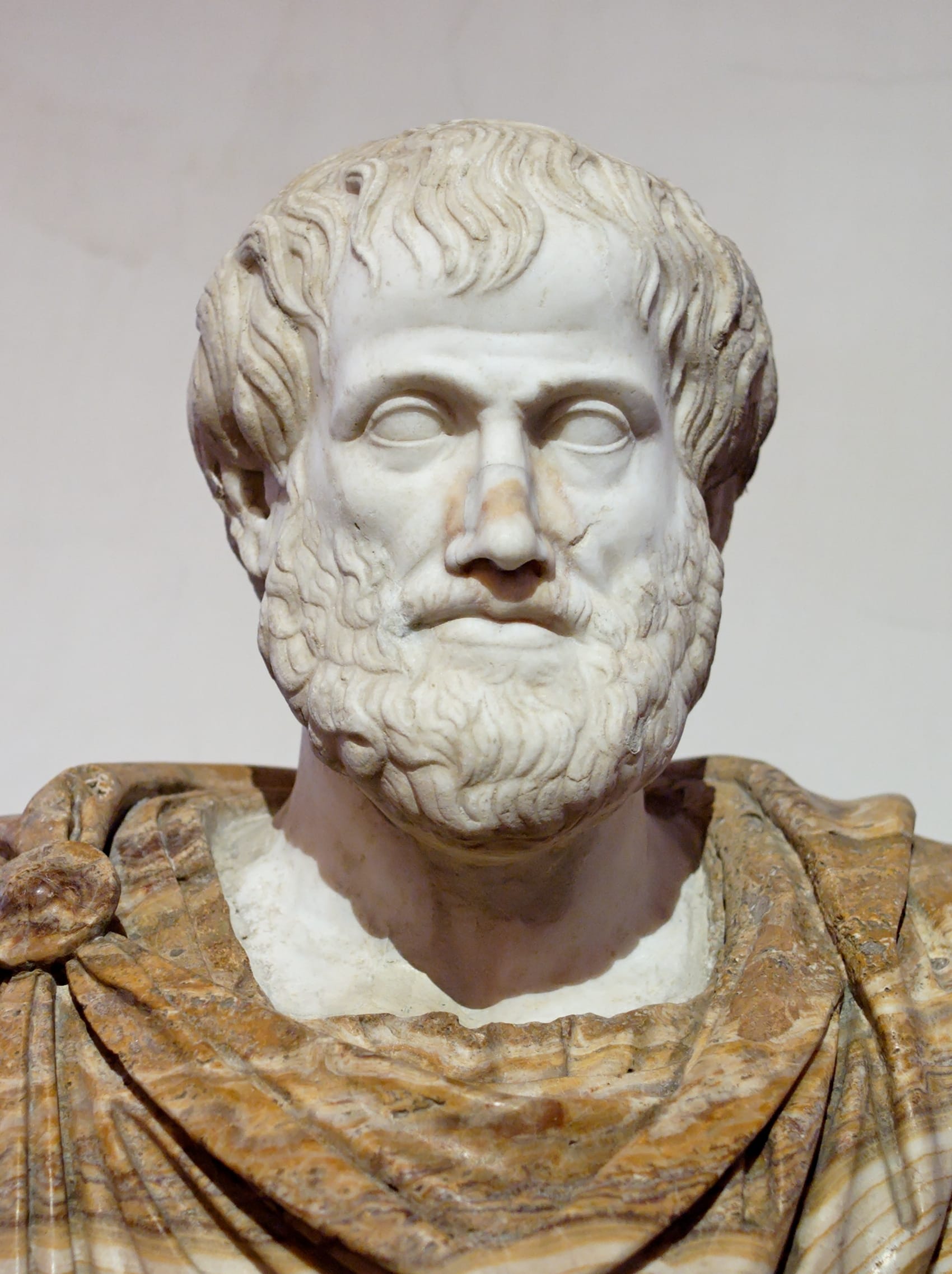
The ancient text behind the identification is Plutarch. Dalrymple quotes him writing in the first century AD of a "precinct of the nymphs near Mieza, where to this day the visitor is shown the stone seats and shady walks of Aristotle." All That's Interesting, citing Kottaridi's comments to Live Science, reports her saying that, according to Plutarch, Philip II commissioned the school for the education of Alexander and the children of the Macedonian nobility. Greek City Times says Plutarch is the main ancient text tying the complex to Aristotle's school.
What is argued, and what isn't settled
Kottaridi's own framing is confident. Greek City Times reports her calling the site "the very place where Aristotle taught Alexander the Great and the young Macedonians who would go on to become leaders across the known world."
The cautions are in the coverage too. All That's Interesting says more research must be done before the identification is definitively confirmed. Dalrymple writes that the excavations remain in an early phase, and that what has been exposed amounts essentially to a floor plan rather than a fully intact building.
Some of the claims rest on Kottaridi's own interpretation:
- The Library of Alexandria. Dalrymple reports that she believes the Library, founded by the former Mieza student Ptolemy, was modelled on the gymnasium.
- Destruction by Rome. Dalrymple reports that she has found ash all over the site, suggesting the gymnasium was "systematically destroyed" alongside the old capital as a symbol of the pre-Roman regime. His account places the burning of Aigai and Pella after a failed revolt 20 years after Rome defeated the last Macedonian king in 168 BC. All That's Interesting instead says the Romans destroyed the school in 168 BC. The two accounts give different dates for the destruction.
Outside voices are warm but are not confirmations. Alexander's biographer Robin Lane Fox told Dalrymple: "It is truly an amazing find." Elizabeth Baynham, a senior lecturer at the University of Newcastle in Australia who was not involved in the excavations, told Live Science that Alexander's education under Aristotle would have been excellent. She said the school's distance from Pella would potentially have given Alexander "a chance for escape if his father was assassinated."
Why her track record matters
Kottaridi has a record here. Dalrymple describes her as a former assistant to Manolis Andronikos, who found Philip of Macedon's tomb in 1977, and as someone who has done probably more than anyone else alive to bring back the world of ancient Macedonia. In this case she challenged the tentative identification of the site and then dug where she said the answer was. The test that matters is whether further excavation and study confirm the school.
Dalrymple quotes her on what comes next: "This is just the beginning of what we will find."
Sources
All That's Interesting (2026) 'Archaeologists In Greece Found An Ancient School Complete With Intact Benches Where Students Like Alexander The Great Listened To Lectures More Than 2,000 Years Ago', All That's Interesting, 28 September 2026, available at: https://allthatsinteresting.com/greece-ancient-royal-gymnasium (Accessed: 30 October 2026).
Dalrymple, S. (2026) 'Is This Where Aristotle Taught Alexander the Great?', National Geographic, 30 October 2026, available at: https://www.nationalgeographic.com/newsletters/article/aristotle-gymnasium-alexander-the-great-stones-and-bones (Accessed: 30 October 2026).
Giannopoulos, Bill (2026) 'Dig at Mieza Brings Aristotle's School for Alexander into View', Greek City Times, 29 September 2026, available at: https://greekcitytimes.com/2026/09/29/mieza-aristotle-alexander-royal-gymnasium/ (Accessed: 30 October 2026).
Newsbomb (2025) 'Εδώ δίδαξε ο Αριστοτέλης τον Μέγα Αλέξανδρο: Στο φως η ανασκαφή του βασιλικού γυμνασίου', Newsbomb, 27 August 2025, available at: https://www.newsbomb.gr/politismos/story/1674771/edo-didakse-o-aristotelis-ton-mega-aleksandro-sto-fos-i-anaskafi-tou-vasilikoy-gymnasious (Accessed: 30 October 2026).
Picture credits
- Top picture: The palace at Aigai, during excavation and restoration work in September 2019. Image: Iolchos07, CC BY-SA 4.0, via Wikimedia Commons
- Aristotle, in a marble bust (copy after Lysippos). Image: Marble bust of Aristotle (copy after Lysippos), Altemps Museum, Rome — public domain (source)
- Map: drawn from Natural Earth (public domain) and Wikidata.

