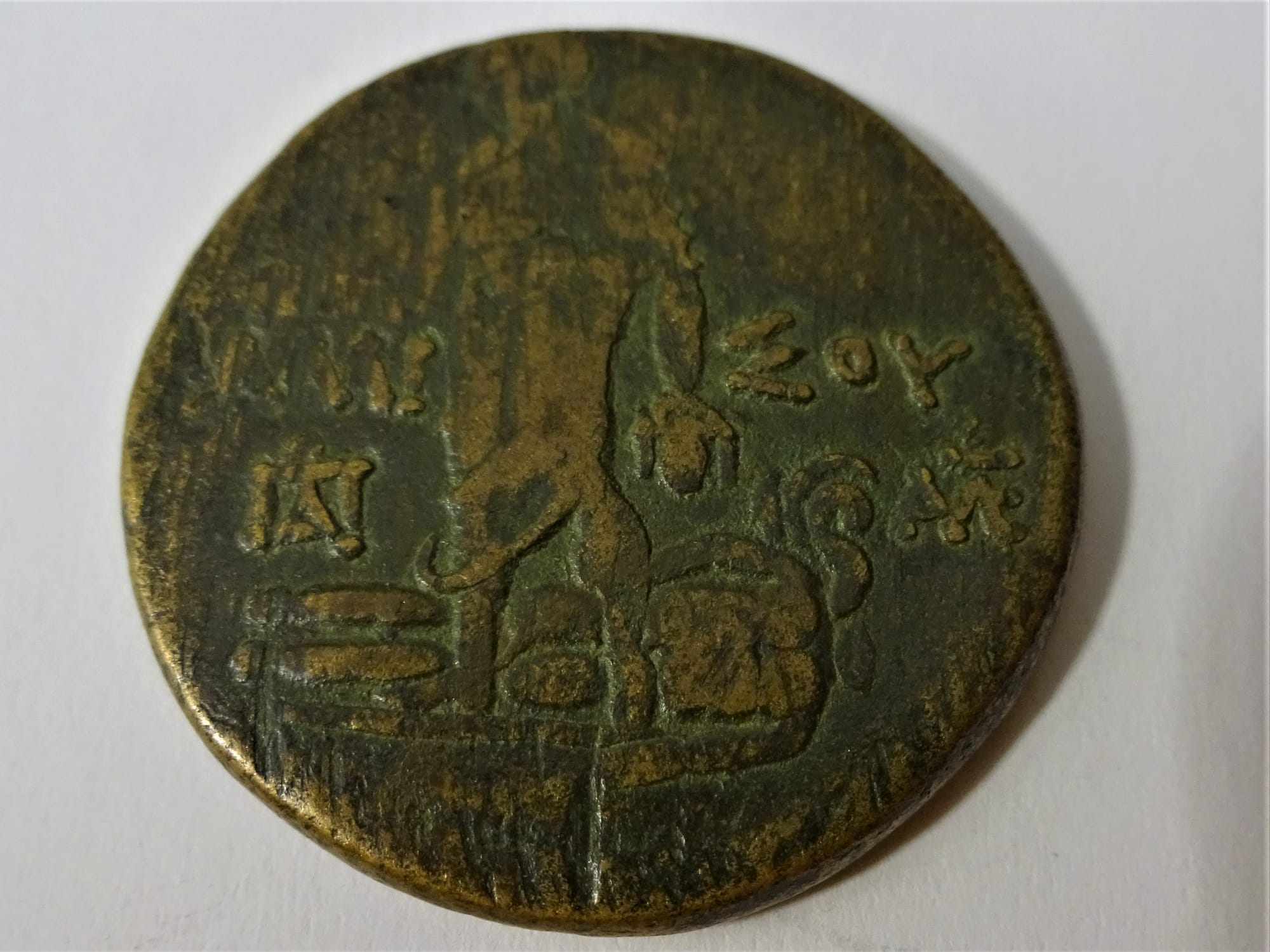
A Greek monster turns up on a king's coins, on a tombstone and on a small clay plaque from a bathhouse. A new study from northern Türkiye traces how that one image was put to different uses over several centuries. Arkeonews and Anatolian Archaeology both reported it this week, in two articles by the same writer.
The study is by Şengül Dilek Ful of Tokat Gaziosmanpaşa University. Its title is "The Place and Significance of Medusa in Tokat in the Light of Numismatic and Archaeological Finds", and it appeared in Edebiyat ve Beşeri Bilimler Dergisi (the Journal of Literature and Humanities), issue 78. Ful sets coins from the ancient cities of Kabeira, Komana and Taulara, all in present-day Tokat Province, beside sculptures, funerary monuments and smaller objects in the Tokat Museum. According to Anatolian Archaeology, the study traces Medusa's image from the Hellenistic period into Late Antiquity.
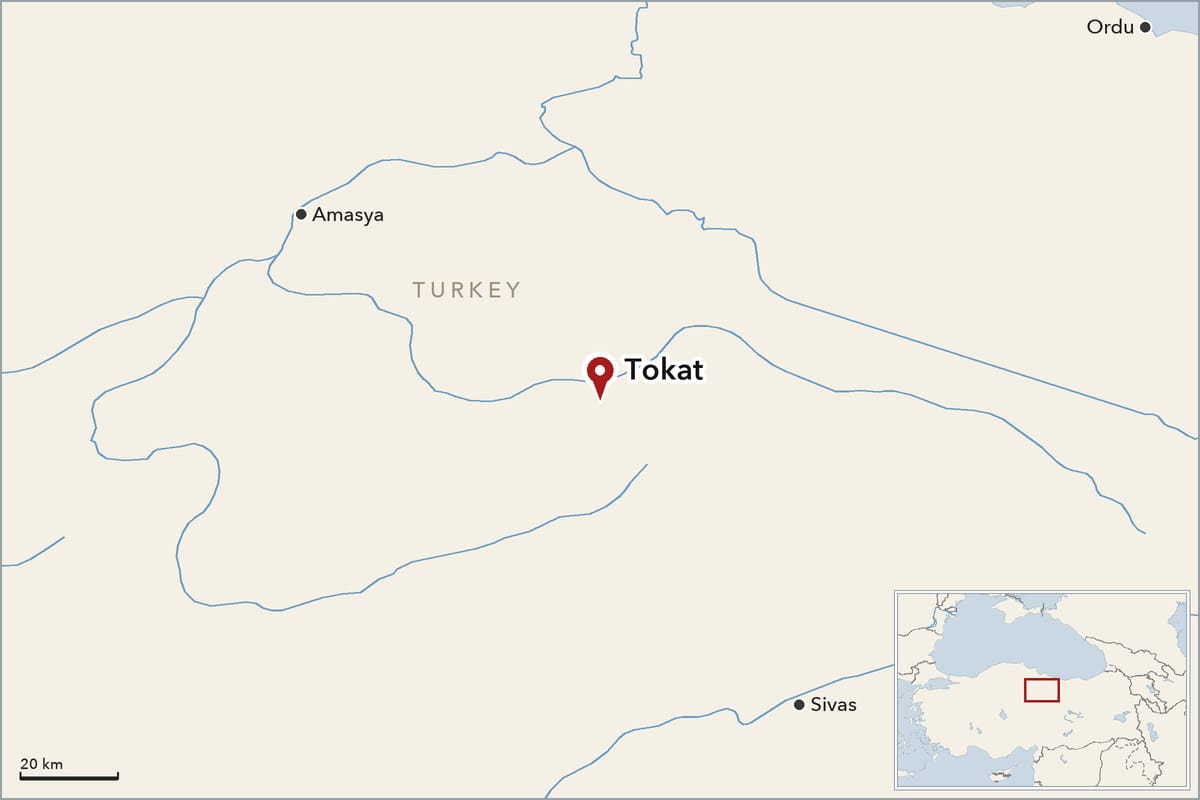
A king, a hero and a severed head
The earliest evidence Ful examines comes from the reign of Mithradates VI, who ruled the Kingdom of Pontus from approximately 120 to 63 BC. Arkeonews says his armies fought three major wars against Rome.
Arkeonews describes a bronze coin struck nearly 2,100 years ago on which Perseus holds Medusa's severed head in one hand and a curved sword in the other, with her body at his feet. Athena, the goddess who helped him, appears on the other side. It identifies two coin types in the study. One pairs Athena with Perseus and the severed head. The other puts Medusa's head on a shield or aegis, with Nike carrying a palm branch on the opposite side.
Arkeonews reports that at Kabeira and Komana both designs appear, and that Taulara, which it describes as a fortress associated with the royal treasury of Mithradates, also issued coins showing Perseus displaying the head.
Arkeonews says the Perseus coins "may also have carried a political warning" and reports that Ful interprets the imagery as part of Mithradates' broader propaganda, drawing on earlier studies of Pontic coinage. Anatolian Archaeology puts it more cautiously: Ful examines the possibility that the designs contributed to the king's political messaging during his conflicts with Rome, "although their precise interpretation remains open to discussion". The story is not a settled case of a myth used as a weapon. It is a reading of the coins that a scholar has put forward, and one of the two reports presents it as an open question.
From royal emblem to guardian of the dead
Medusa's image was still in use in the region long after the kingdom had gone. Both outlets describe Roman-period objects in the Tokat Museum and from nearby excavations:
- A sarcophagus fragment. It is decorated with garlands, two Medusa heads and a nude Eros. The museum inventory classified it as Hellenistic, but Ful argues its style points to the second century AD. An inventory label is a claim like any other, and here a scholar is disputing one.
- A basalt stele from Niksar. Arkeonews says rescue excavations in 1982 recovered it from the Leylekli Bridge necropolis. It dates to the third or fourth century AD and carries a six-line Greek inscription beneath a carved Medusa head.
- A terracotta plaque from Sebastopolis. Arkeonews says it was found in 2017 during excavations of a Roman bath. Medusa has wavy hair and small wings, and a channel on the reverse shows the plaque was made to be attached to something else.
Anatolian Archaeology says the stele's image probably served a protective purpose, guarding the deceased against harmful forces. Such images are generally described as apotropaic, meaning intended to ward off evil or misfortune. Arkeonews makes the same point and adds that the terrifying quality that made Medusa useful as a symbol of military intimidation could also explain her place above the dead.
A monster with a young woman's face
Both articles report that Medusa's look changed. Anatolian Archaeology says earlier Greek representations frequently emphasised monstrous features, while Roman artists increasingly favoured a youthful, human face framed by flowing hair. Small wings and other attributes kept her identifiable.
Bronze appliques and circular terracotta plaques in the Tokat Museum fit this decorative turn. Comparable objects elsewhere in the Roman world adorned furniture, military equipment, horse harnesses and buildings. Both outlets stress that the original functions of the individual Tokat pieces remain uncertain.
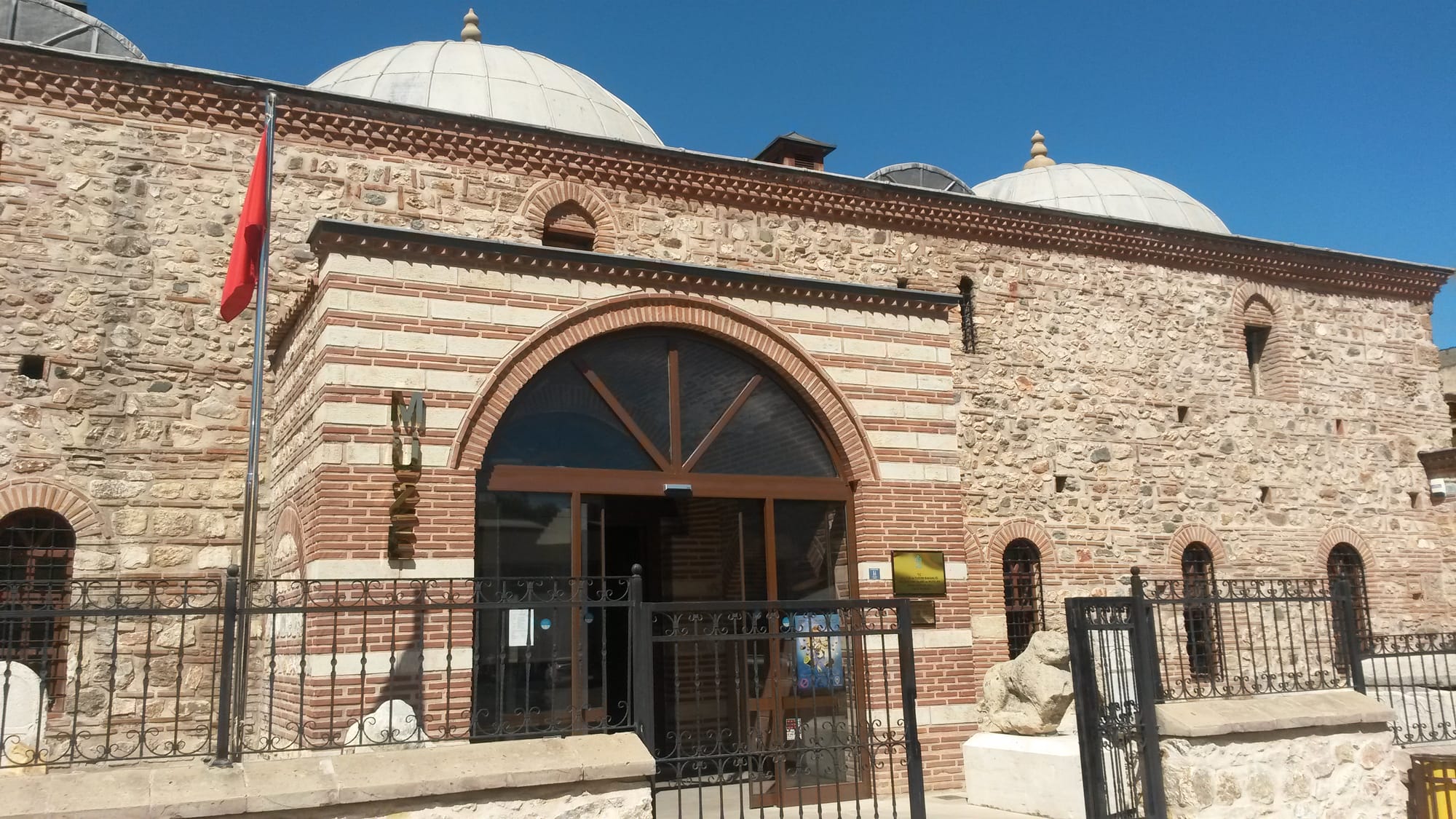
The architectural evidence runs later still. The study also examines an architrave-frieze from Sebastopolis dated stylistically to the Antonine period (second century AD) and a decorated orthostat block in the Tokat Museum attributed to the mid-fourth or early fifth century AD. Arkeonews notes that by then the kingdom of Mithradates had been gone for centuries.
What the study does not claim
Arkeonews reports that Ful does not claim the objects represent one uninterrupted cult or a single meaning preserved unchanged through time. Anatolian Archaeology likewise says the objects do not necessarily reflect a single, continuous belief. What the study documents, in the Anatolian Archaeology report's words, is "the enduring popularity of a figure whose terrifying reputation made her equally suitable for representing power, protection, and artistic beauty".
My own view is that this is the sensible way to read it. The coins show Medusa in the service of a king. The tombs and trinkets show later people finding other uses for her. The link between the two is a familiar image, and not necessarily a shared belief.
Sources
Büyükyıldırım, O. (2026) 'Ancient Anatolian Artifacts Reveal Medusa's Remarkable Transformation Over 500 Years', Anatolian Archaeology, 20 October 2026, available at: https://www.anatolianarchaeology.net/ancient-anatolian-artifacts-reveal-medusas-remarkable-transformation-over-500-years/ (Accessed: 21 October 2026).
Buyukyildirim, O. (2026) 'How a Greek Myth Became a Political Weapon Against Rome in Ancient Anatolia', Arkeonews, 20 October 2026, available at: https://arkeonews.net/how-a-greek-myth-became-a-political-weapon-against-rome-in-ancient-anatolia/ (Accessed: 21 October 2026).
Ful, Ş. D. (2026) 'The Place and Significance of Medusa in Tokat in the Light of Numismatic and Archaeological Finds', Edebiyat ve Beşeri Bilimler Dergisi, 78, pp. 230-239, available at: https://doi.org/10.55590/literatureandhumanities.1949971 (Accessed: 21 October 2026).
Picture credits
- Top picture. A Pontic coin from Amisos, which was not one of the three cities in the study. Coin photo: Hermann Junghans, CC BY-SA 3.0 (via Wikimedia Commons)
- Image: Tokat Museum building: Demir dude, CC BY-SA 4.0 (via Wikimedia Commons)
- Map: drawn from Natural Earth (public domain) and Wikidata.

