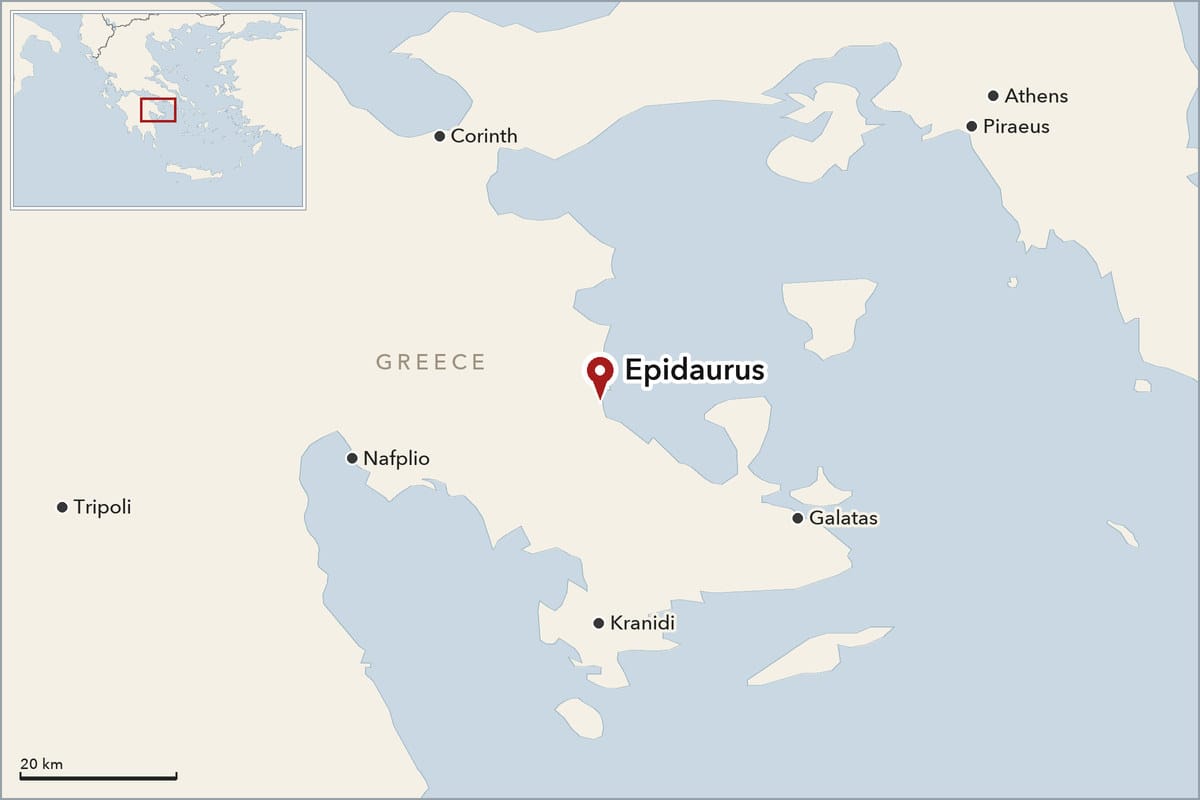
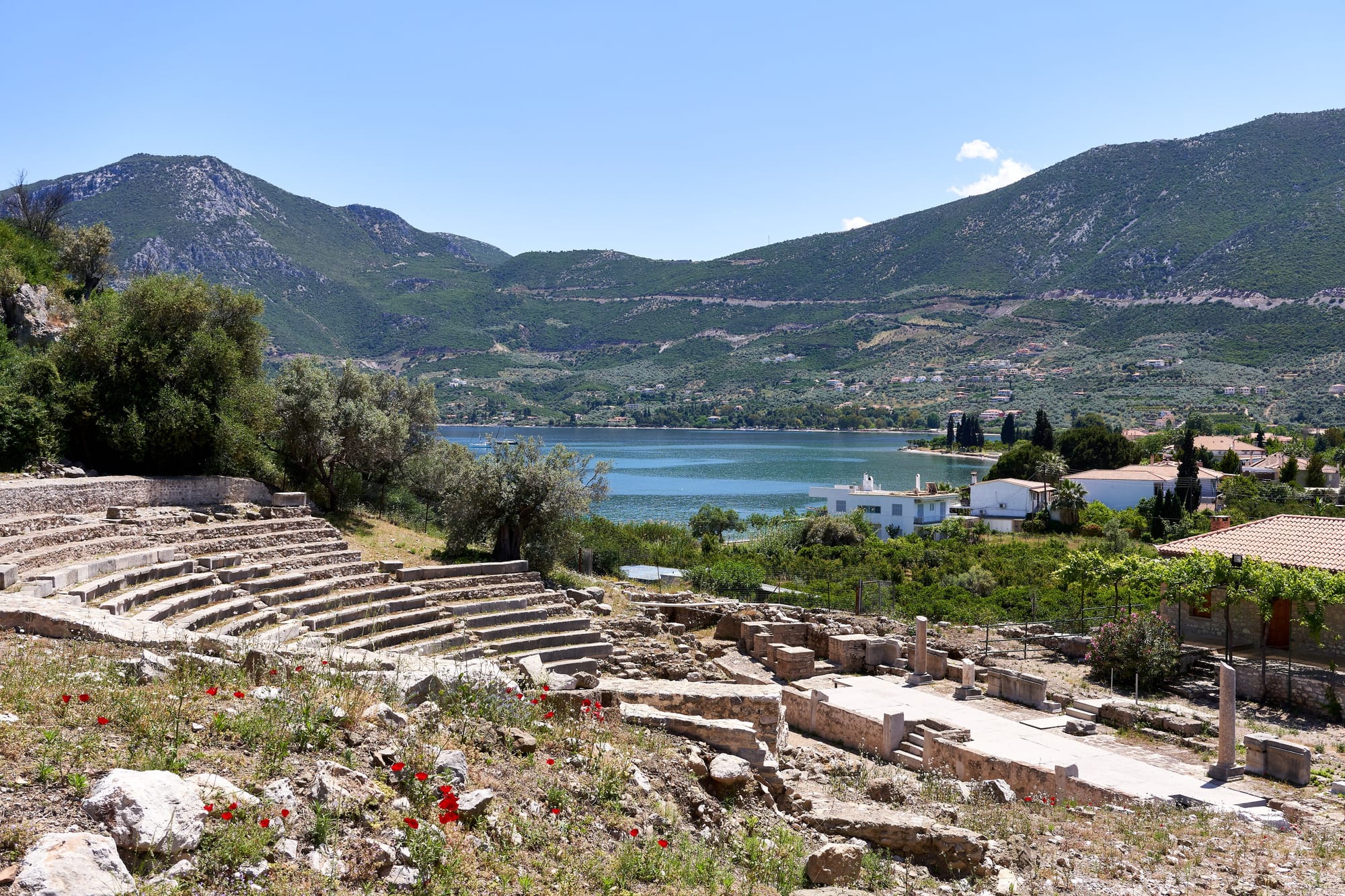
Ta Nea reported on 10 November 2026 that Vasilis Lambrinoudakis, an emeritus professor at the University of Athens and co-director of the excavation at ancient Epidaurus, had presented its findings. He did so at a special ceremony at the University of Athens honouring the excavation's donors. Ta Nea puts the ancient city 20 metres from the Small Theatre of Epidaurus.
The temenos Pausanias described
According to Ta Nea, a milestone in the research is the location of the temenos of Asclepius that Pausanias describes and whose position had been unknown. Near the Small Theatre, in the centre of the ancient city, the dig revealed an organised cult area with an open-air enclosure, a monumental fountain and a large reservoir, a western stoa and a nymphaeum. Ta Nea says the finds strengthen the identification with the temenos Pausanias mentions, among them a potsherd with the name of Asclepius incised on it.
This is not wholly new: Archaeological Reports, in an entry published on 23 December 2025, noted that the Ministry of Culture had reported the Epidaurus excavations in a press release in January 2024. That entry says the sanctuary goes back to the fourth century BC, with a main phase that matches second-century AD renovations, likely linked to Hadrian's visit to Epidaurus in AD 124. It also lists an outdoor enclosure with a monumental fountain and portico, an Ionic-style water intake, and evidence for votive offerings, statues of Asclepius and Epione, and water-related cult use. Archaeological Reports says artefacts, including a shell engraved with the god's name, clay discs, figurines and lamps, confirm the identification of the site.
A goddess of motherhood, and an unnamed statue
Ta Nea singles out small clay discs with relief busts of women and fragments of large figurines with similar subjects. The researchers link them to a female deity of motherhood and the regeneration of nature, who may have been identified in the local cult tradition with Epione, the wife of Asclepius.
The question also returns to a marble statue of a woman, found in the ancient city in 2021, made of Parian marble and wearing a chiton and himation. Ta Nea writes that it remains open, though unconfirmed, whether this is the statue of Epione that Pausanias describes in the temenos of the god of medicine.
An Archaic building beneath the Tholos
The great Sanctuary of Asclepius lies outside the urban core, and Ta Nea says research there has also shed light on the origins of the cult. An Archaic building dating to the late seventh century BC has been uncovered beneath the Tholos, about six decades earlier than the date previously taken as the start of the cult of Asclepius. It had a columned ground floor and an underground room cut into the natural rock. Its walls were covered in thick deep-red plaster, and a pebble mosaic survives on the floor, described as one of the best-preserved early examples of its kind in Greece.
Ta Nea says its layout, western orientation and descent into the underground room reinforce the interpretation that it was a cult building tied to the chthonic nature of Asclepius, before the later Tholos was built. The Stavros Niarchos Foundation says the building appears to have stood where the Tholos, the sanctuary's most important building, was later put up, in the fourth century BC. The foundation adds that the site is expected to add new data on the architecture of the period and on the cult itself, which it says most probably began earlier than the period known until now.
Building K and the Crypt
Ta Nea reports that work in the sanctuary is complemented by finds in the so-called Building K, an extensive complex with successive building phases from Hellenistic to late Roman times. An underground room known to the excavators as the Crypt is of particular interest. Its three-part layout, reused architectural members, openings that let midday light in and the lower parts of four amphorae set on the natural ground have led to the hypothesis that it may have been linked to mystery cults in the late imperial period. Ta Nea adds that its use has not been definitively settled.
Archaeological Reports, by contrast, dates Building K to the second century AD, recording multiple building phases up to the late fourth century AD, with a crypt suggesting use for mystical cult activities in the Late Roman period. The same entry reports that the central square of the Asklepion was cleared of stones and votive offerings from nineteenth- and early twentieth-century excavations, and that about 450 stones were documented and moved for study and storage.
Who is running the project
Ta Nea says the findings belong to a University of Athens research programme that has studied the Asklepieion systematically since 2015 and has extended its work to the ancient city. Scientific responsibility lies with Lambrinoudakis, University of Athens associate professor Stelios Katakis and the Ephorate of Antiquities of Argolis, through its head Grigoris Grigorakakis. The Stavros Niarchos Foundation says the excavations, led by Lambrinoudakis, have run since 2018 with its donation, carried out by the University of Athens with the Ephorate and the non-profit company Asklepiades. The foundation describes the Sanctuary of Asclepius at Epidaurus as one of the most important places of healing in ancient Greece and a UNESCO World Heritage monument today.
Sources
Gwyther, H. K. (2025) '3 Newsround - Archaeological Reports', Cambridge Core, 23 December 2025, available at: https://www.cambridge.org/core/journals/archaeological-reports/article/3-newsround/3EF731DCB0EC6C5D944987C206DA3CB8 (Accessed: 11 November 2026).
snf.org (n.d.) 'Νέα Ευρήματα των Ανασκαφών στο Ιερό Ασκληπιού στην Επίδαυρο', snf.org, available at: https://www.snf.org/el/nea-istories/istories/nea-eyrimata-ton-anaskafon-sto-iero-asklipiou-stin-epidayro/ (Accessed: 11 November 2026).
ΤΑ ΝΕΑ (2026) 'Επίδαυρος: Το χαμένο τέμενος του Ασκληπιού', ΤΑ ΝΕΑ, 10 November 2026, available at: https://www.tanea.gr/print/2026/11/10/lifearts/to-xameno-temenos-tou-asklipiou/ (Accessed: 11 November 2026).
Picture credits
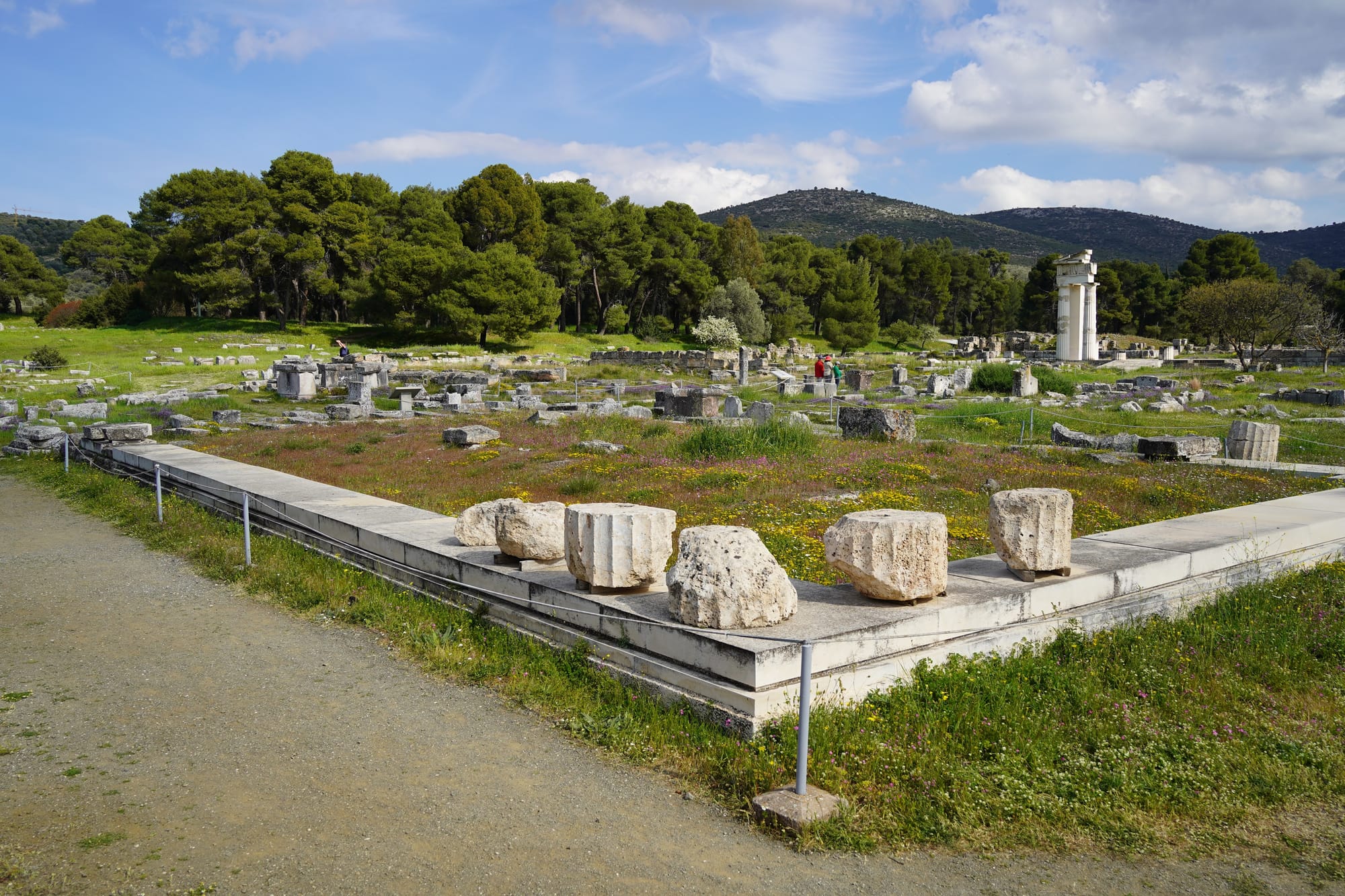
- Top picture: The Temple of Asclepius in the Sanctuary of Asclepius at Epidaurus. Image: Sanctuary of Asclepius at Epidaurus: TimeTravelRome, CC BY 2.0 (via Wikimedia Commons)
- The ancient city lies close to the Small Theatre of Epidaurus. Image: The Little Theatre of Ancient Epidaurus: George E. Koronaios, CC BY-SA 4.0 (via Wikimedia Commons)
- Map: drawn from Natural Earth (public domain) and Wikidata.

