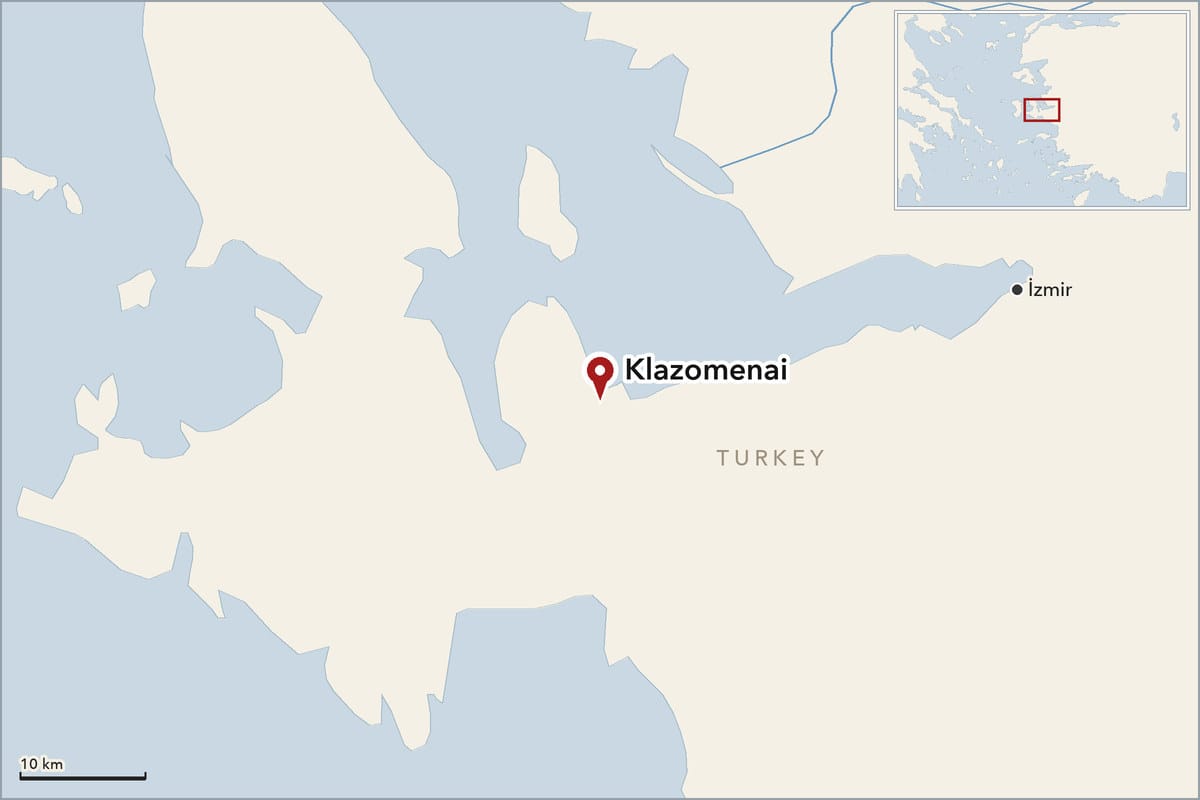
A paper published on 12 February 2026 in Vegetation History and Archaeobotany reports plant remains from Clazomenae, an Ionian site on the western coast of Anatolia. The remains come from the excavated settlement on land and from the submerged harbour. It is a small assemblage, and the authors say so. It is also a rare look at what people grew and ate in this part of the Greek world.
A thin evidence base
The authors begin with a gap. For the eastern Aegean, meaning the western Anatolian coast and its neighbouring islands, they say archaeobotanical remains have been reported from just five sites across the Late Helladic IIIC to Classical periods. They name the sanctuary at Heraion, Miletus, Troy, Dascyleum and Ayazmaçukur. They describe rural production in the region as poorly understood.
That is the hole this study aims to fill. The Clazomenae assemblage spans the 12th to late fourth centuries BC. The land excavations were led by Yaşar Ersoy of Yaşar University, and the harbour excavations by Vasıf Şahoğlu of Ankara University and Irfan Tuğcu of Osmaniye Korkut Ata University.
What came out of the harbour
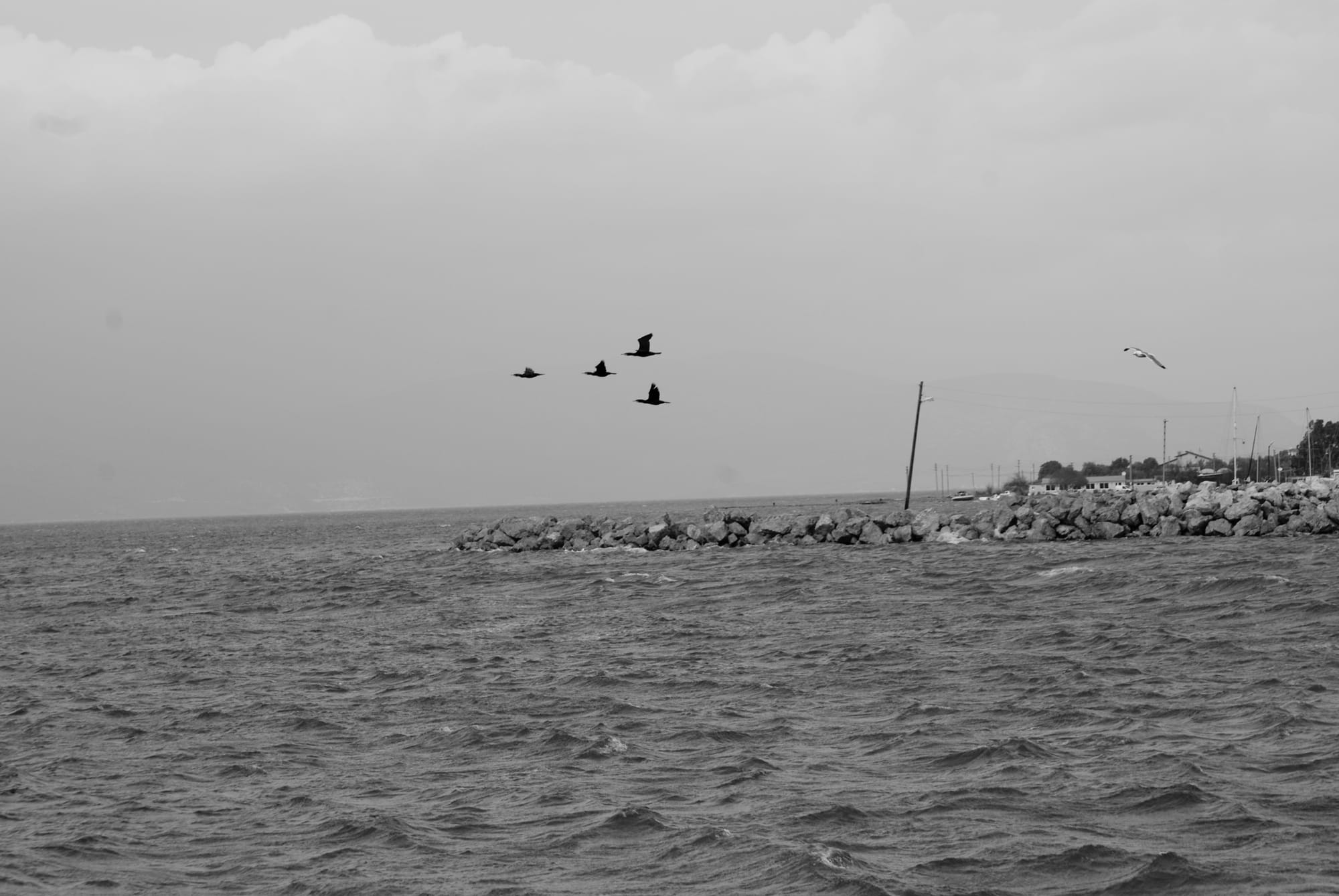
The paper describes coastal breakwaters built in the 7th–6th centuries BC that enclosed a harbour of around 5 hectares. The authors say abundant remains attest to intensive use of that harbour in the Archaic and Classical periods.
Plant remains there were recovered by hand. More than 750 samples from the Archaic and Classical periods were briefly scanned, and 308 were selected for further analysis. The authors say the assemblage was overwhelmingly dominated by olive stones, hazelnut shells and wood fragments. The selected samples also held grape seeds, almond shells, a kermes oak cupule, a sloe stone and a medick seed pod. A single cone of Turkish pine (Pinus brutia) was also found.
How the remains got there is the authors' reading, not something observed. Most olive stones were unbroken, which they say suggests the olives were eaten whole. The hazelnut shells tended to be split in half or fragmented. The authors call this consistent with people eating olives and hazelnuts on boats or around the harbour and throwing the waste into the water. They say the same route can explain the grape seeds, almond shells and sloe stone, and they suggest it was the main way plant remains reached the harbour deposits.
The pine cone has more than one possible explanation in the paper. Pine cones may have been collected for their nuts, but this one was closed, which could be why it was discarded. It may also have fallen from a nearby tree, or have been stripped from twigs gathered for another use.
The settlement on land
On land, the team recovered 6,922 plant remains from 66 samples. About 95 per cent came from Archaic contexts, with only 248 from the Late Helladic IIIC period, 94 from the Protogeometric and six from the Geometric. The authors say the small size of the assemblage and the limited number of samples from some periods warrant caution.
A late 6th-century BC well produced most of the fruit and nut remains. The authors say the olive stones there were mostly intact, consistent with olives eaten whole rather than pressed for oil. Oil was still part of the picture. The paper notes an olive press built in the first half of the 6th century BC and rebuilt on a larger scale in the last quarter of that century. It also reports Aristotle's statement, in the Economics, that the land of Clazomenae bore olive oil in abundance.
Two finds the authors single out as rare are caper and sloe. They say the sloe seeds are the first from the Archaic Aegean, and that caper has been reported from only two other Iron Age sites in the Aegean. The authors say the Clazomenae finds support the status of both as likely foodstuffs in the region. On caper, they also say current Aegean finds give little insight into the extent and nature of its consumption.
Barley, wheat and millet
The study also tracks change over time. Samples from the Late Helladic IIIC and Protogeometric periods are dominated by barley and bitter vetch. In the Archaic period, the authors report a major increase in free-threshing wheat at the expense of barley.
They suggest this shift may result from an increase in rural settlement and more intensive cultivation of the landscape. They also raise a weakness in their own data: the earlier deposits come from a different part of the settlement than the Archaic pithoi that supplied most of the later remains, so the difference could reflect what was sampled. They say the samples across periods are all consistent with refuse or secondary deposits, which suggests the shift may well reflect a real change in the crops grown. They also say further archaeobotanical evidence is needed to test the idea.
Millet is a caution of its own. It makes up 84 per cent of the cereal and pulse remains from the land excavations, but the authors say its Archaic abundance is primarily due to a single deposit. That deposit is a storage jar (pithos) in which millet is 98 per cent of the cereal and pulse seeds. The authors judge that deposit unlikely to be the jar's original stored contents, and more likely refuse dumped in after the jar fell out of use.
What to make of it
My reading is that the harbour finds are the vivid part and the barley-to-wheat story is the part to watch. The olive stones and hazelnut shells give a plausible picture of snacking at the waterfront, but the paper itself frames that as consistent with, not proof of, how they arrived. The farming shift rests on a small assemblage, with few samples from the earlier periods and deposits from different parts of the site, and the authors say as much.
The thinness of the regional record matters too. A conclusion about how Ionian farming changed rests here on one site's assemblage, in a region where the authors counted only five sites with such remains before this work.
Their wider conclusion is that the plant remains support farming and land use in the ancient Aegean as predominantly local in scale. They add that some value-added products are likely to have been traded across maritime exchange networks.
Sources
Maltas, T., Tanzer, J., Akgeyik, I., Ersoy, Y., Koparal, E., Tuğcu, I. and Şahoğlu, V. (2026) 'Rural production and land use at Iron Age Clazomenae, Ionia', Vegetation History and Archaeobotany, 35, pp. 677–695, 12 February 2026, DOI: 10.1007/s00334-026-01088-5, available at: https://link.springer.com/article/10.1007/s00334-026-01088-5 (Accessed: 4 November 2026; article updated 3 March 2026: ORCID for author Julia Tanzer corrected).
Picture credits
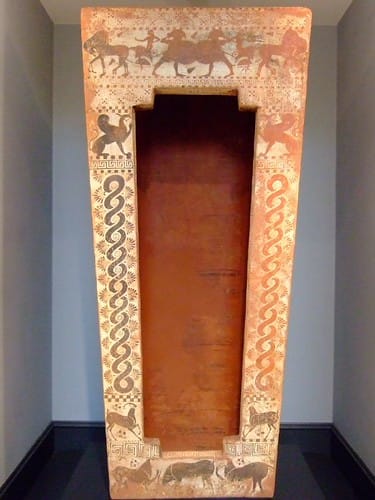
- Top picture: A Greek terracotta sarcophagus from Clazomenae (attributed to the Albertinum Group, 480–470 BCE). Terracotta sarcophagus from Clazomenae (480–470 BCE), photo: mharrsch, CC BY 2.0 (source)
- Clazomenae sits within the Gulf of Izmir region of western Anatolia. Özbek Akkum beach, Urla, Turkey, photo: Yağmur Aydın, CC BY-SA 3.0 (source)
- Map: drawn from Natural Earth (public domain) and Wikidata.
