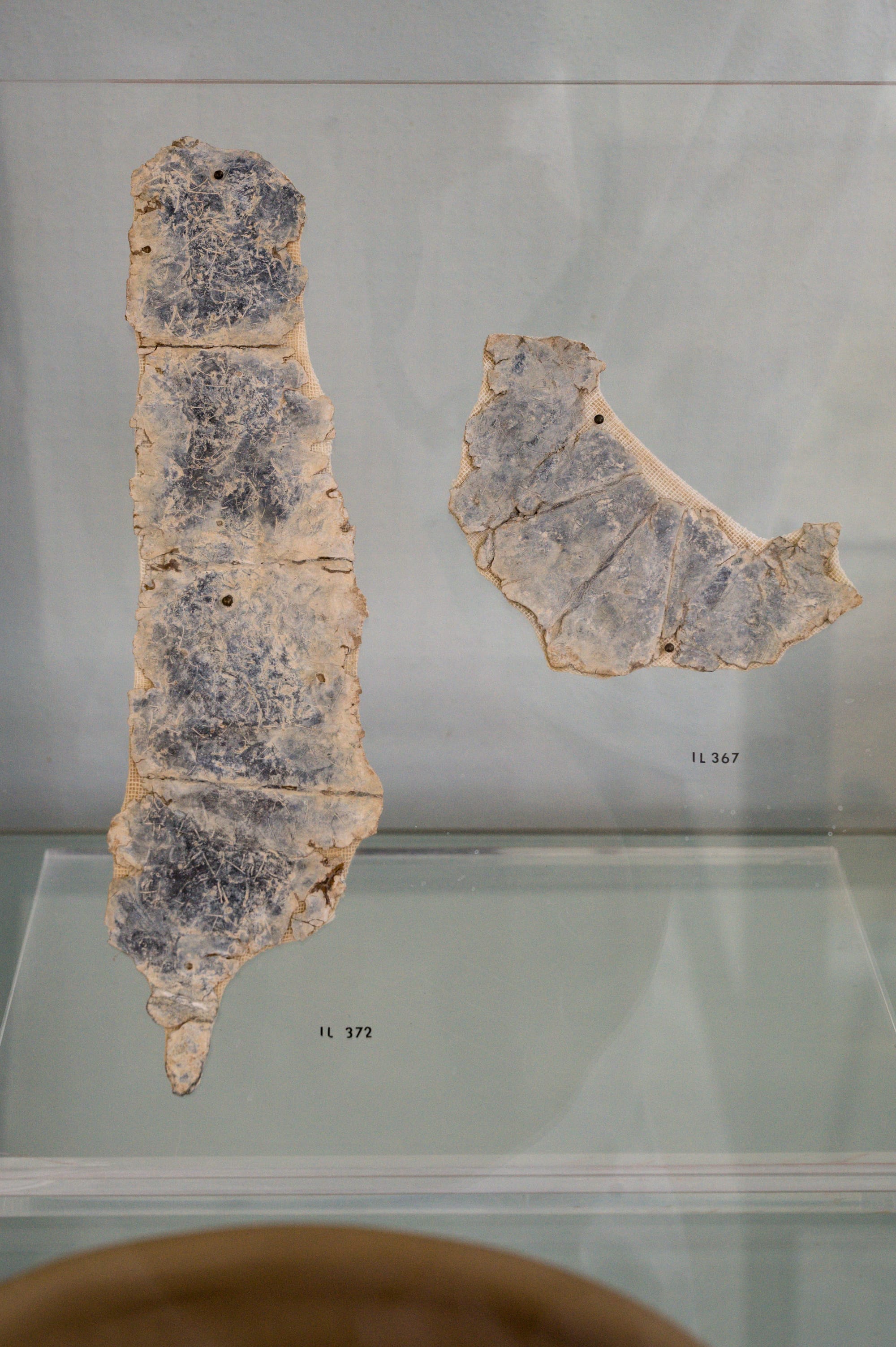
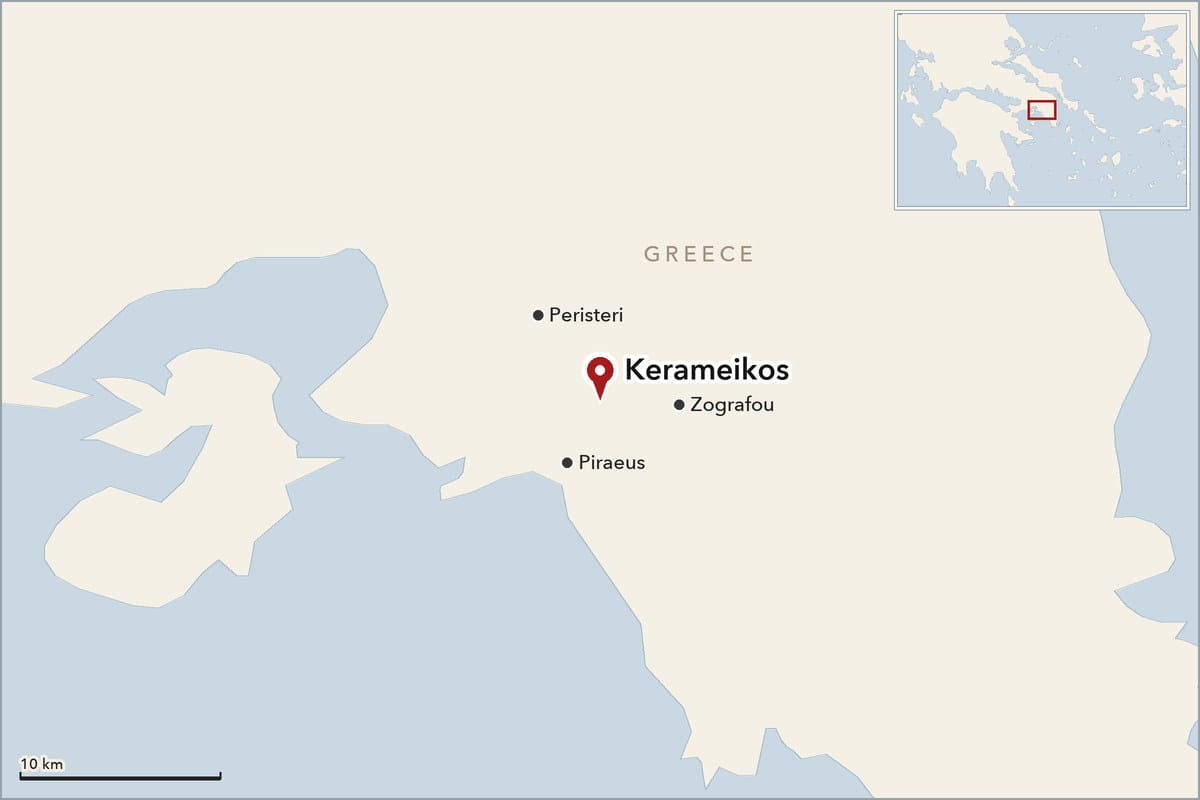
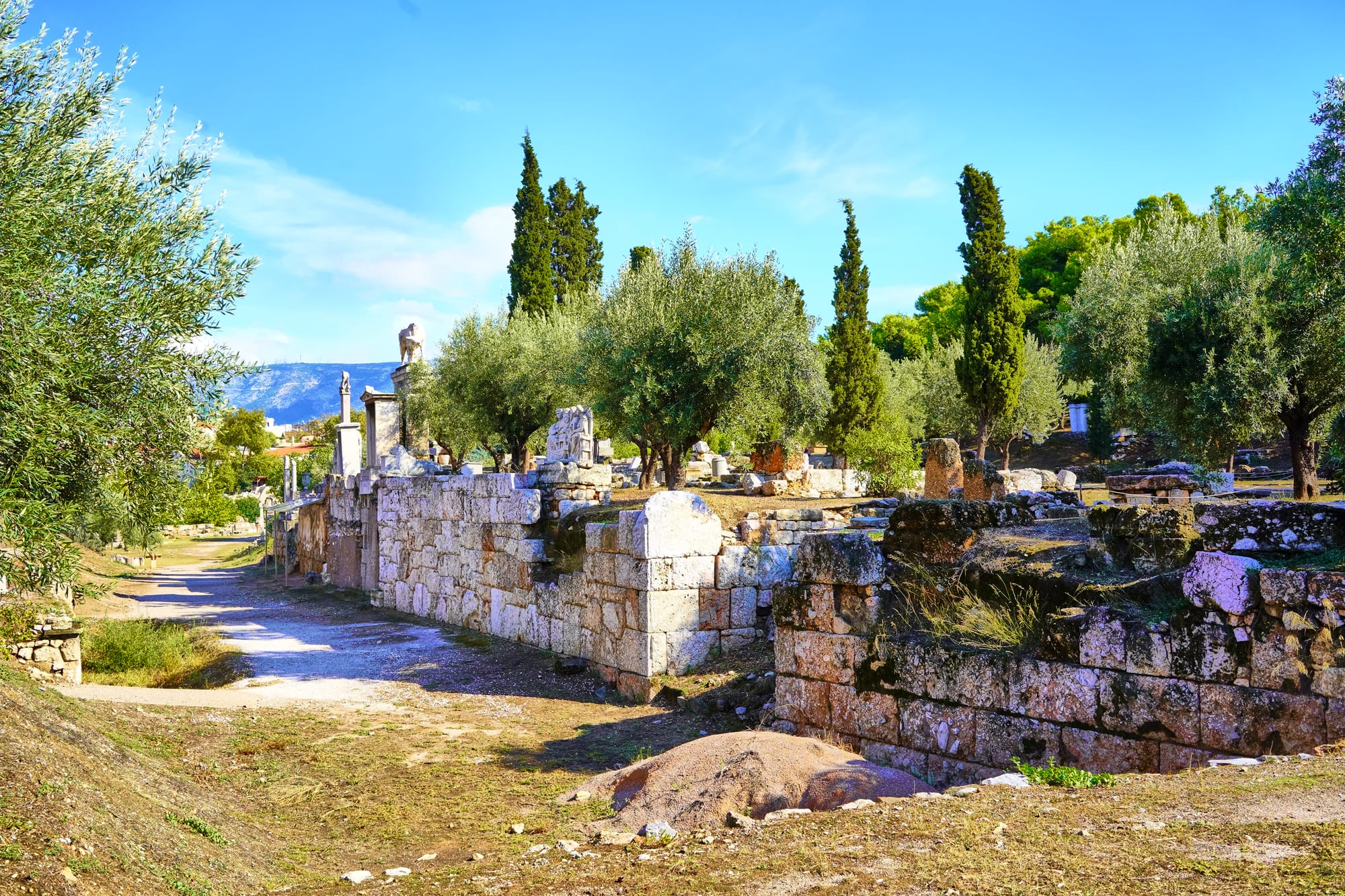
Thirty lead tablets recovered from the bottom of a public well at the edge of the Kerameikos necropolis in Athens record curses cast by Athenians against their rivals, according to Archaeology Magazine. Haaretz reported on 3 February 2020 that the small tablets invoked the gods of the underworld to cause harm to others. The Kerameikos, Haaretz noted, was ancient Athens' main burial ground.
The find is not new. It was reported in early 2020, and it has kept circulating. It is still worth a look because of the question it raises. Why would someone drop a curse down a well rather than leave it in a grave?
What was in the well
According to Archaeology Newsroom, the well was first discovered in 2016 during an excavation looking into the water supply of baths near the Dipylon. The same dig brought up cups, containers for mixing wine, earthen candles, pots, coins and a wooden box. The tablets came out of that well. Dr Jutta Stroszeck of the German Archaeological Institute at Athens, described by Archaeology Newsroom in 2020 as heading the Kerameikos research, is the archaeologist the reports quote.
Archaeology Magazine describes the tablets in some detail. Several were folded and pierced with nails, and others were fashioned in the shape of livers or coffins. One of them condemns an allegedly promiscuous newlywed named Glykera. In the magazine's translation it opens: "We curse Glykera the wife of Dion, to the gods of the underworld, so she be punished and her wedding be unfulfilled."
The reports give different ages, and not always for the same thing. Archaeology Magazine puts the curses at some 2,300 years ago. Haaretz's headline calls it a 2,500-year-old well. Digging Up The Past, relaying another outlet's report, says the tablets date to the Classical period, 2,500 years ago.
Why a well?
The magazine's explanation turns on a law. Until the late fourth century B.C., it says, Athenian curse tablets were usually deposited in tombs. Then, according to the first-century B.C. Roman author and orator Cicero, the statesman Demetrius of Phaleron instituted a new law restricting elaborate burials and funeral practices.
To evade detection by the officers employed to enforce that law, the magazine says, crafty sorcerers "seem to have" turned to wells as a more secretive place for their rituals. Haaretz puts the same idea in its subhead: Athenians, thwarted by a new law from placing their hexes in tombs of the untimely dead, sought a new route to the underworld gods.
Water supplied the other half of the logic. Stroszeck explains that the Greeks believed water, and groundwater in particular, was a conduit to the streams of the underworld. "Water nymphs protected the water," she says, "and were thus thought to be capable of directing the curses to the gods of the underworld." Speaking to Haaretz, as relayed by Archaeology Newsroom, she said that water, especially drinking water, was sacred in Greek religion. She said the Nymphs could turn hostile if their water was not respected, and that gifts were often thrown in to keep them content.
Who ordered them, and why
Archaeology Newsroom quotes Stroszeck: "The person who ordered a curse is never mentioned by name; only the 'recipient'". It reports that archaeologists argue there were four basic reasons to curse someone: to win a lawsuit, to succeed in business, to win at sports, and for matters of love and hate. It also says Ancient Greeks usually hired "professionals" to write the curses.
Digging Up The Past, relaying another outlet's report, says Athenian citizens would pay to have such curses made.
What it adds up to
The story is tidy: a law pushes a ritual out of the cemetery and into the water supply. It is also hedged in the source. Archaeology Magazine says the sorcerers "seem to have" moved to wells, and it does not say the tablets prove a motive. My reading is that the tablets are solid evidence of what Athenians were cursing and where they were putting the curses. The burial-law explanation for the well is a reasonable account of why, but it is the reading of the reporting rather than something the tablets themselves state.
Sources
Archaeology Newsroom (2020) 'Kerameikos: Ancient curse tablets found inside a well', Archaeology Wiki, 10 February 2020, available at: https://www.archaeology.wiki/blog/2020/02/10/kerameikos-ancient-curse-tablets-found-inside-a-well/ (Accessed: 1 November 2026).
Bohstrom, P. (2020) 'Dozens of Curse Tablets Found Down a 2,500-Year-Old Well in Athens', Haaretz, 3 February 2020, available at: https://www.haaretz.com/archaeology/2020-02-03/ty-article/.premium/dozens-of-curse-tablets-found-down-a-2-500-year-old-well-in-athens/0000017f-e6fb-d62c-a1ff-fefbccd00000 (Accessed: 1 November 2026).
Koutoupis, P. (2024) 'Ancient Greek Curse Tablets found an Athens Well', Digging Up The Past, 17 June 2024, available at: https://www.diggingupthepast.net/p/ancient-greek-curse-tablets-found (Accessed: 1 November 2026).
Leonard, B. (2020) 'The Cursing Well', Archaeology Magazine, May/June 2020, available at: https://archaeology.org/issues/may-june-2020/digs-discoveries/digs-greece-curse-well/ (Accessed: 1 November 2026).
Picture credits
- Top picture: Lead curse tablets from another site, not the Kerameikos find. Lead curse tablets, 3rd century BC, Archaeological Museum of Nemea — photo: Zde, CC BY-SA 4.0, via Wikimedia Commons
- The Kerameikos, the burial ground on the edge of which the well lay. The archaeological site of the ancient cemetery of Kerameikos — photo: George E. Koronaios, CC BY-SA 4.0, via Wikimedia Commons
- Map: drawn from Natural Earth (public domain) and Wikidata.

