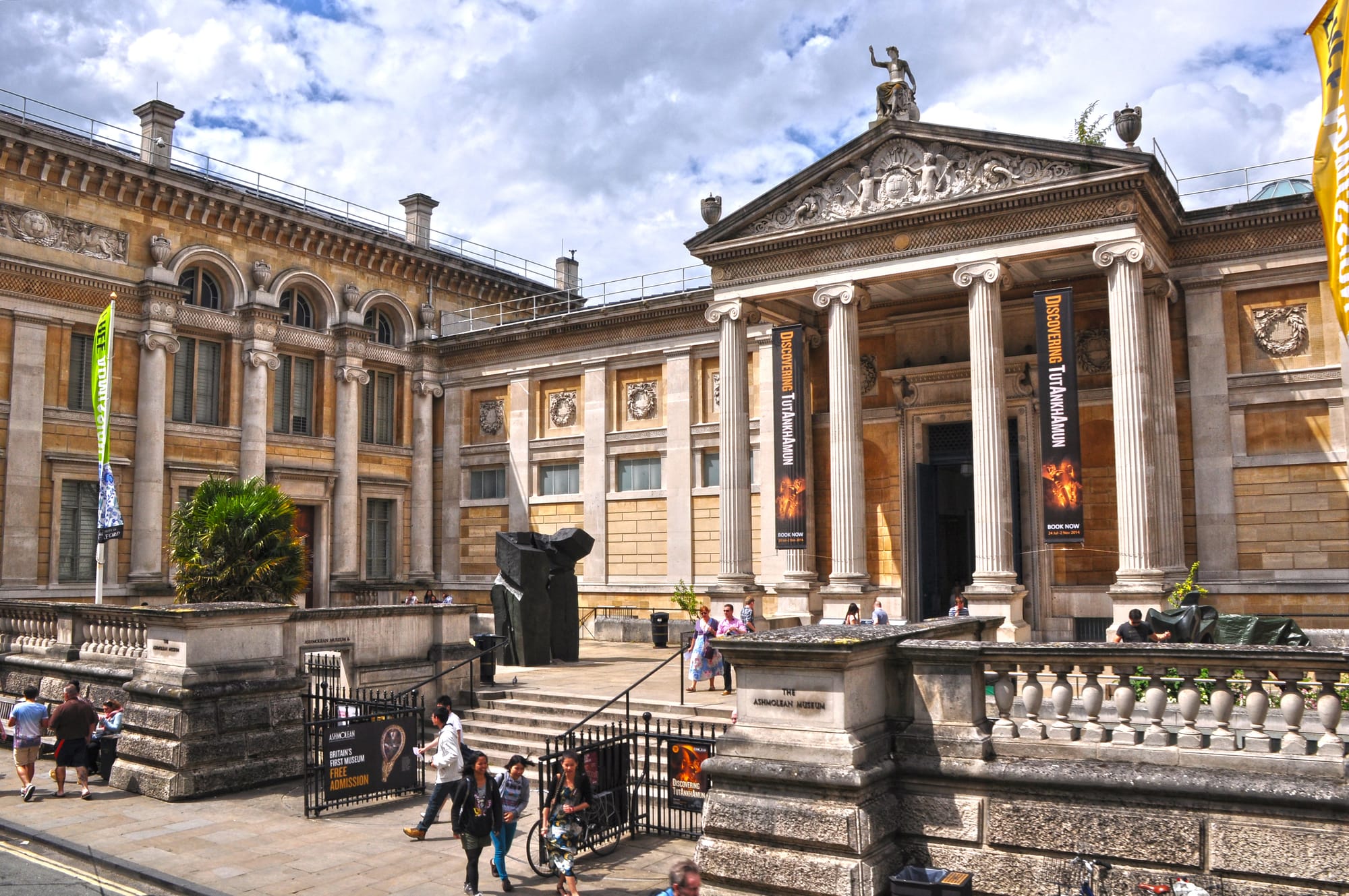
The Ashmolean Museum in Oxford opened Aphrodite: The Making of a Goddess on 8 October 2026. It runs until 11 April 2027 in the museum's John Sainsbury Exhibition Galleries. The museum's press release says the show brings together archaeology, sculpture, painting, contemporary art and fashion, and follows the goddess from the eastern Mediterranean through the Greek and Roman worlds and Renaissance Europe to the present day.

A Greek goddess who starts in Cyprus
The most interesting claim in the museum's account is where the story begins. According to the press release, Aphrodite emerged as a goddess in Cyprus, and it was there that visitors and immigrants from the Greek Aegean first encountered her. The release adds that she grew out of a much older tradition of female deities worshipped across the eastern Mediterranean, among them Astarte and Ishtar. It ties this to centuries of cultural exchange linking Cyprus with the Near East, Egypt and the Greek world.
That is a richer story than the shorthand 'the Greek goddess of love, beauty, and desire', the phrase the Oxford Magazine's listing opens with before it, too, traces her origins to Cyprus. I find the Cyprus-first account the more interesting one: it gives Aphrodite a history that begins before the Greeks, and makes the Greeks look like people who met her rather than invented her.
The press release says visitors will see what it calls the earliest known representation of Aphrodite: a copper alloy figurine from the Ashmolean's own collection, dating to around 1200 BCE. It is described as one of the oldest objects in the exhibition. A recreated Aphrodite sanctuary, built from loans from Cyprus and major international collections, is meant to show how she was worshipped across the island and how she was depicted in ancient Cypriot art.
The dating is worth watching. The press release says her fame has lasted 5,000 years, and the Ashmolean's director, Dr Xa Sturgis CBE, says the exhibition "traces more than 5,000 years of history". The listings from the Oxford Magazine and the Classical Association instead describe her as an all-powerful goddess in Cyprus over 3,000 years ago, and say the objects date from around 1400 BCE. The earliest object the press release names is the c. 1200 BCE figurine. The 5,000-year figure is the museum's framing, and the published material I have seen does not explain how it relates to the object dates.
Venus, the nude and the Renaissance
As Greek influence spread and Rome rose, the press release says, Aphrodite became Venus, an important Roman deity and a symbol of imperial identity. The exhibition uses this phase to follow the female nude as an image tradition. At its centre is a Capitoline Venus, c. 160 CE, on loan from the Louvre. The release describes it as a celebrated Roman version of the Knidian Aphrodite, the 4th-century BCE sculpture by Praxiteles. The release says the Knidian statue is widely regarded as the first monumental female nude in ancient art, and that its image was copied hundreds of times across the Roman Empire and survived after the original disappeared.
The Crouching Aphrodite is also in the show, lent from the Royal Collection. It is a Roman marble, after a Hellenistic original, dated to the 2nd century CE.
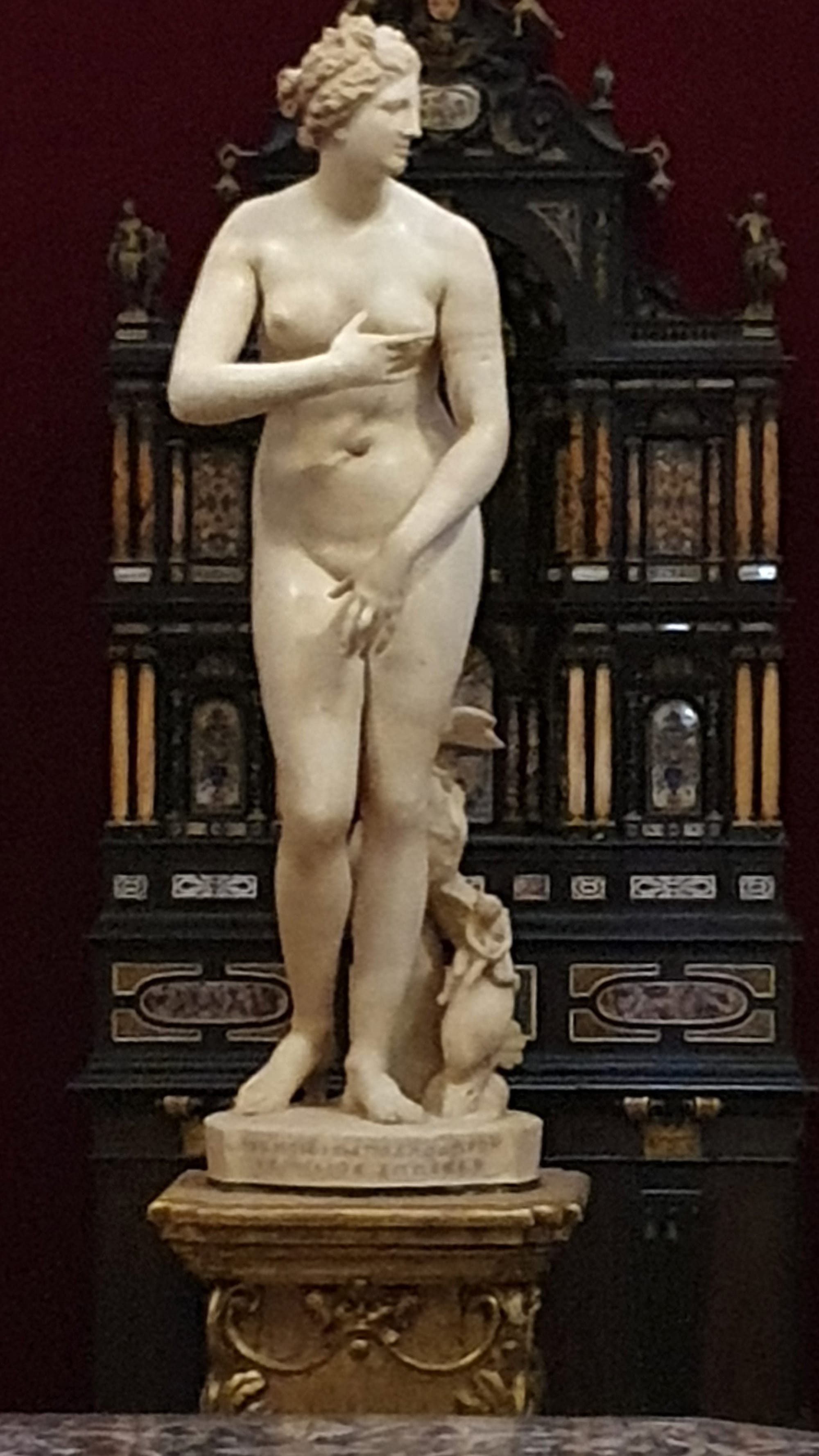
The release says Renaissance rediscovery of such sculptures inspired artists, collectors and rulers. The most famous example was the Venus de' Medici, unearthed in a vineyard in Rome in the 1530s. The exhibition includes the first full-scale bronze cast of it, commissioned for Blenheim Palace by the 1st Duke of Marlborough in 1711.
From Botticelli to Beyoncé
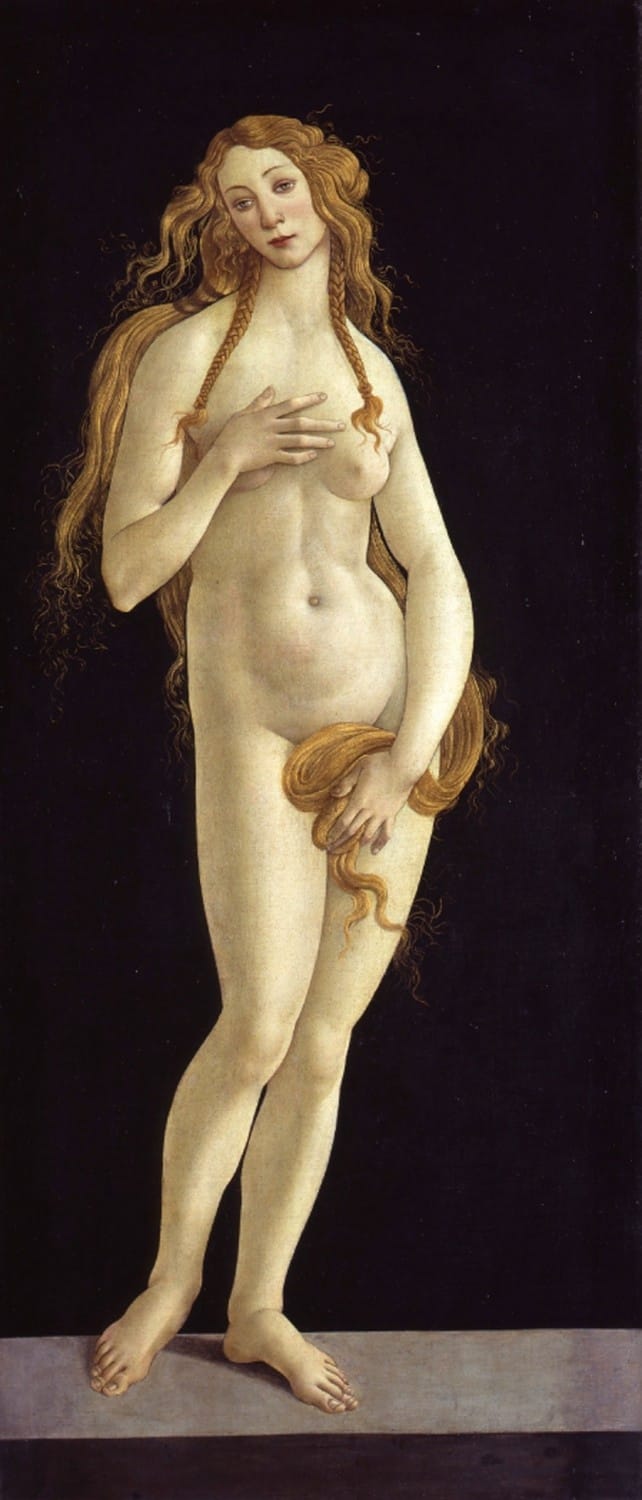
The final section moves to modern and contemporary work. Among the exhibition's wider highlights, the press release lists Botticelli and workshop's Venus (c. 1490) from the Gemäldegalerie in Berlin. For the final section it names Michelangelo Pistoletto's Venus of the Rags (1967, 1974), which sets a garden centre statue before a heap of discarded clothing, and Yves Klein's blue reinterpretation of the Venus de' Medici (1982). Fashion comes in through Jonathan Anderson's Loewe dress, redesigned for Beyoncé's 2023 Renaissance world tour.
The release says Aphrodite's image has long served as a focus for society's changing ideas about women, femininity and female beauty.
Who made it and how to see it
The exhibition is curated by Dr Anja Ulbrich, the Ashmolean's A.G. Leventis Curator of Cypriot Antiquities. Her co-curators are Dr Peter A. Thompson and Liam McNamara of the Ashmolean, and Dr Jennifer Sliwka of the Kunsthistorisches Museum, Vienna. In the release Ulbrich says: "Aphrodite has been at the centre of my work." The A.G. Leventis Foundation is the lead supporter.
The Oxford Magazine and Classical Association listings put the number of objects at more than 200, from Cyprus, Greece and Italy, dating from around 1400 BCE to the 21st century. The Ashmolean's press release gives admission as £8–£18.10 (the Oxford Magazine's listing gives £8.40–£16.80), so check current prices on the Ashmolean's website; the museum recommends booking in advance. A fully illustrated catalogue costs £25.
Sources
Ashmolean Museum (2026) 'APHRODITE - press release', Ashmolean Museum, University of Oxford, updated 2 September 2026, available at: https://www.ashmolean.org/press/aphrodite-press-release (Accessed: 25 October 2026).
The Classical Association (2026) 'Ashmolean Museum: 'Aphrodite – the Making of a Goddess'', The Classical Association, 28 July 2026, event listing for 8 October 2026 – 11 April 2027, available at: https://classicalassociation.org/events/ashmolean-museum-aphrodite-the-making-of-a-goddess/ (Accessed: 25 October 2026).
The Oxford Magazine (2025) 'Aphrodite: The Making of a Goddess', The Oxford Magazine, 20 November 2025, event listing for 8 October 2026 – 11 April 2027, available at: https://theoxfordmagazine.com/event/aphrodite-the-making-of-a-goddess/ (Accessed: 25 October 2026).
Picture credits
- Top picture: The Ashmolean Museum, Oxford. Photo: Lewis Clarke, CC BY-SA 2.0, via Wikimedia Commons
- Botticelli's Venus, c. 1490. Image: Sandro Botticelli, Venus, c. 1490, Gemäldegalerie, Berlin (public domain) (source)
- The original marble Venus de' Medici; the exhibition shows a bronze cast. Photo: Yair Haklai, CC BY-SA 4.0, via Wikimedia Commons
- Map: drawn from Natural Earth (public domain) and Wikidata.


