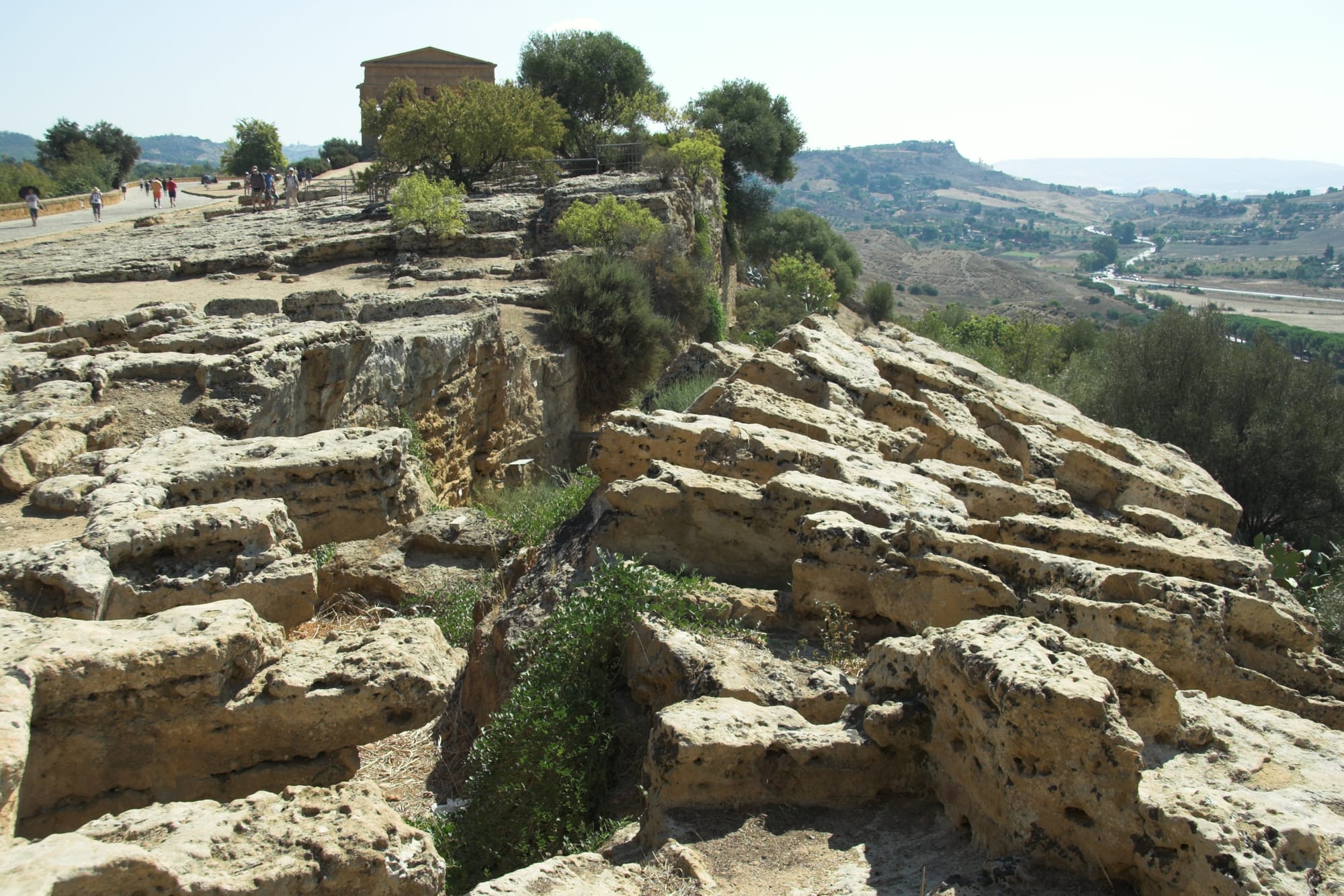
Beside the famous temples of Agrigento, ancient Akragas still had a district that was unknown until recently. That is what the Archaeological and Landscape Park of the Valley of the Temples says its latest excavation season has shown. The Park's release described the third campaign in the Kolymbethra area and on the Case Montana plateau at Agrigento, and said it would conclude on 24 October 2026. According to the Park's mid-October release, the dig was bringing to light a district of ancient Akragas from the fifth century BC.
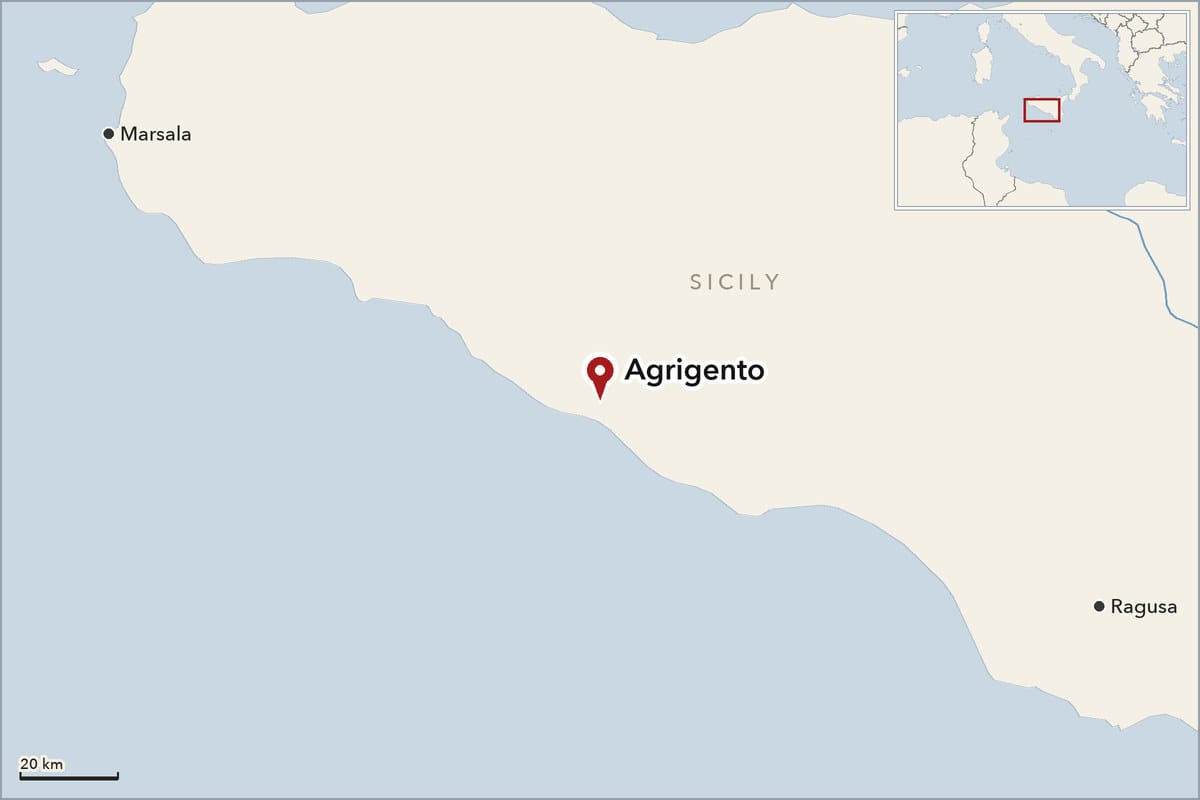
What the Park says is under Case Montana
The Park's account, published in full by Qui Licata on 16 October, says two test pits of about 10 by 10 metres were opened on the Case Montana plateau. In both, the excavators were uncovering monumental remains: powerful walls and traces of buildings destroyed during the Carthaginian siege of 406 BC. The Park says they are perfectly preserved beneath thick layers of collapse.
La Brújula Verde, reporting on 15 October, noted that the Park's note did not say what the buildings were used for or how large the district was. It also relayed a statement from the FAI that earlier trenches next to Case Montana had revealed traces of a sacred area, abandoned early and probably after the 406 BC siege. La Brújula Verde added that whether the two areas belong to the same episode remains for the archaeologists to check.
La Brújula Verde gives the historical frame. It says Akragas was founded around 580 BC by settlers from Gela, and that in 406 BC a Carthaginian army under a general named Hannibal camped outside its walls. Citing the historian Diodorus Siculus, it says the siege dragged on for months and ended with the city evacuated and plundered. AgrigentoNotizie, on 30 October, also described the city of that period as evacuated during the Carthaginian siege.
The stream bed and the lost lake
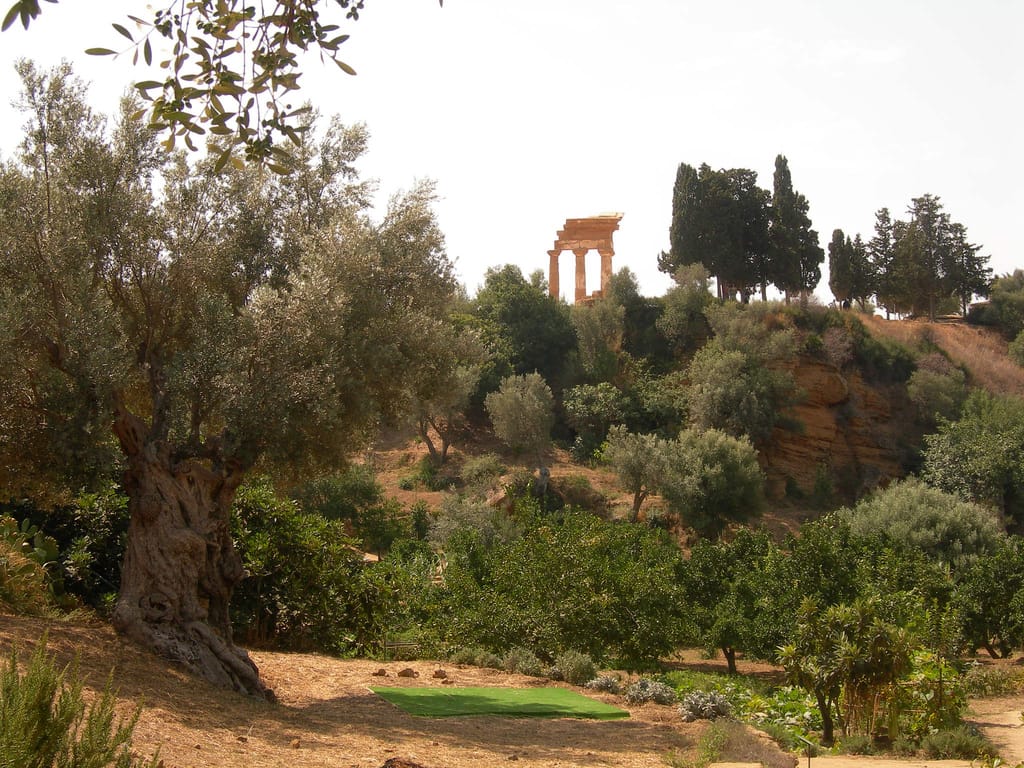
The second strand of the season lies in the stream bed. Once reeds and vegetation were cleared, the team documented new hydraulic structures: drainage conduits and channels, some built and some cut straight into the calcarenite bedrock. In the Park's words, as carried by Qui Licata, they are probably part of the ingenious damming work of the artificial lake of the ancient Kolymbethra. La Sicilia's report on 15 October likewise says they are likely part of those works.
La Brújula Verde fills in the lake. It says Diodorus described an artificial pool outside the city, stocked with fish and with swans and other birds, and that tradition credits it to the tyrant Theron after his victory over Carthage at Himera in 480 BC, with much of the labour attributed to Carthaginian prisoners. It adds that, according to the FAI, the first season in 2024 uncovered a wall of stone blocks about 6.5 metres wide that the researchers suggested could be the dam. La Brújula Verde also says it is not yet known whether that wall and the newly recorded structures belong to a single dam or to several building phases.
Underground, and a look ahead to 2027
Beneath the plateau, work continued on emptying the Ipogeo Nuovo, the New Hypogeum, found in December 2023. The Park says its long history now seems better understood: it began as an ancient conduit tapping groundwater, later became a shelter (the release adds a question mark after "for animals"), and in the nineteenth century served as a rural outbuilding.
Two specialists joined the early days of the mission, according to the release. Andrea Zerboni of the University of Milan's Department of Earth Sciences and Eleonora Regattieri of Italy's National Research Council (CNR) in Pisa surveyed the area to clarify its environmental and geomorphological setting and to pick the best spots for core drilling in 2027. They also drilled out speleothem samples from the Ipogeo di Porta V and the Ipogeo Nuovo, for laboratory analysis in the following months to work out when the mineral deposits formed.
Who is digging
The mission is directed by Claudia Lambrugo of the University of Milan and Maria Concetta Parello, an archaeologist at the Park. It has FAI support and belongs to a five-year research and excavation project set out in a framework agreement signed by three bodies in 2024. The release says the Park and its director, Roberto Sciarratta, strongly wanted it. La Brújula Verde names the three as the FAI, the Park and the university. Lambrugo and Alessandro Pace coordinated 33 undergraduate, master's, specialisation and doctoral students from the university's Department of Cultural and Environmental Heritage.
Since the announcement
La Sicilia reported on 15 October that the FAI, the Park and the University of Milan would present a book, La Kolymbethra di Agrigento – Un giardino d'eccezione, at Casa Sanfilippo the next morning, alongside the results of the new research. The book tells 2,600 years of the landscape's history.
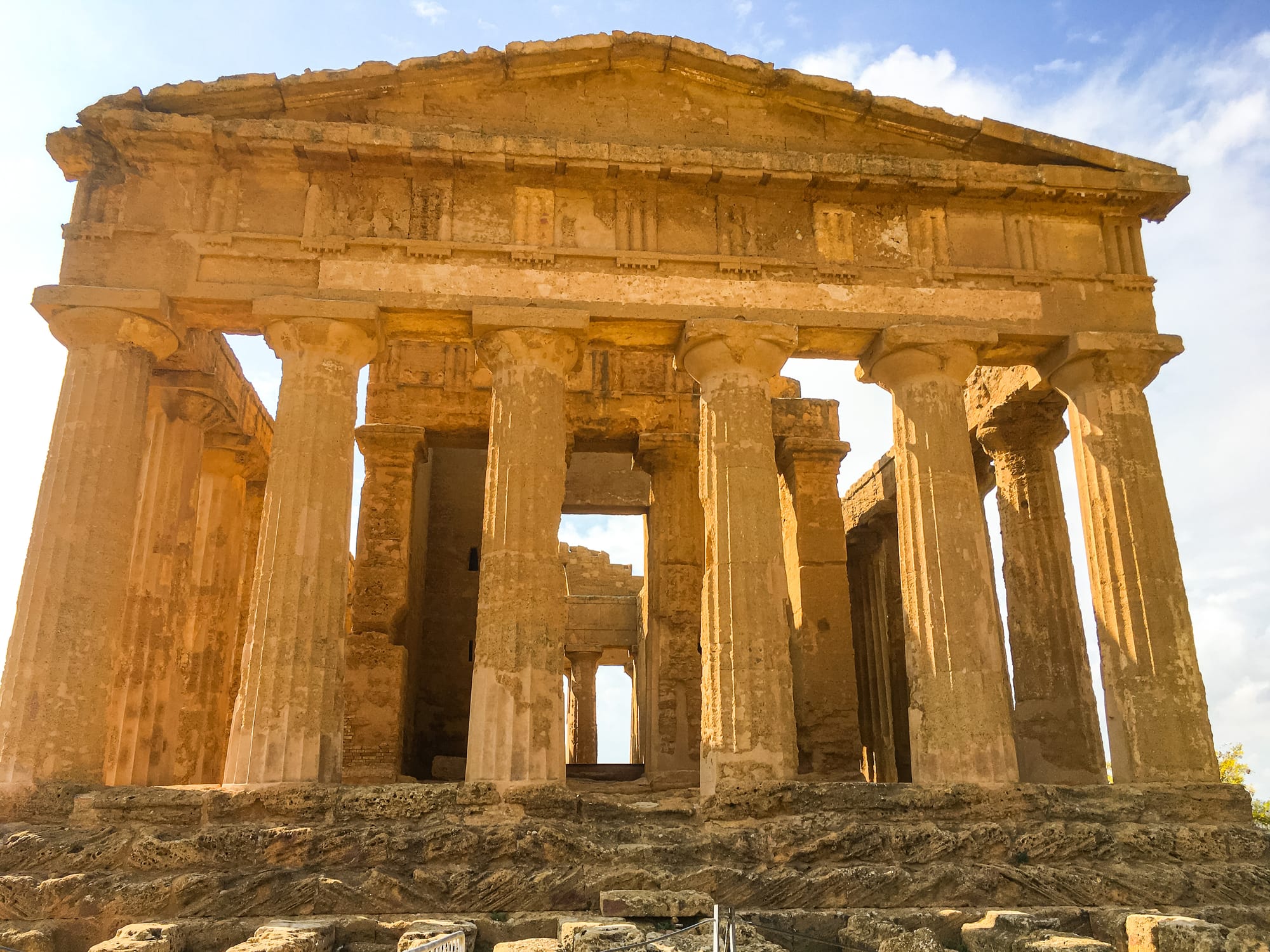
On 30 October, AgrigentoNotizie reported that a new antiquarium was opening to the public a few steps from the Temple of Concordia, in casa Pace, one of the farm buildings in the park. It displays finds from the most recent excavation campaigns and has an immersive room where visitors can enter a digital reconstruction of a fifth-century BC house, modelled on houses of the classical city identified in the area north of the temple hill. Sciarratta told the outlet it was the first time the Park was telling the story of its recent excavations and of a part of the city that had been unknown.
My reading is that this is a progress report, not a publication. The Park has told us where the walls are and what destroyed them. What the buildings were used for is the question that matters now.
Sources
AgrigentoNotizie (Caruana, G.) (2026) '"Museo a chilometro zero" nella Valle dei Templi: un nuovo antiquarium che espone i reperti dei recenti scavi', AgrigentoNotizie, 30 October 2026, available at: https://www.agrigentonotizie.it/attualita/apertura-antiquarium-esposizione-reperti-recenti.html (Accessed: 2 November 2026).
La Brújula Verde (Carvajal, G.) (2026) 'Archaeologists Find a Lost Greek Neighborhood in Sicily, Destroyed When Carthage Besieged the City 2,400 Years Ago — and Evidence of a Giant Artificial Fish Pond', La Brújula Verde, 15 October 2026, available at: https://www.labrujulaverde.com/en/2026/10/archaeologists-find-a-lost-greek-neighborhood-in-sicily-destroyed-when-carthage-besieged-the-city-2400-years-ago-and-evidence-of-a-giant-artificial-fish-pond/ (Accessed: 2 November 2026).
La Sicilia (Rosso, L.) (2026) 'Dopo oltre 2.000 anni scoperto un quartiere dell'antica Akragas sepolto dall'assedio cartaginese', La Sicilia, 15 October 2026, available at: https://agrigento.lasicilia.it/news/cronaca/3081933/dopo-oltre-2-000-anni-scoperto-un-quartiere-dell-antica-akragas-sepolto-dall-assedio-cartaginese.html (Accessed: 2 November 2026).
Qui Licata (Augusto, A.) (2026) 'I Cartaginesi la distrussero nel 406 a.C.: l'antica Akragas "rinasce" sotto la Kolymbethra', Qui Licata, 16 October 2026, available at: https://www.quilicata.it/i-cartaginesi-la-distrussero-nel-406-a-c-lantica-akragas-rinasce-sotto-la-kolymbethra/ (Accessed: 2 November 2026).
Picture credits
- Top picture: Escarpment on the edge of the Valley of the Temples. Photo: Zde, via Wikimedia Commons (CC BY-SA 4.0)
- The Kolymbethra valley, Agrigento. Photo: fab., CC BY 2.0, via Wikimedia Commons
- The Temple of Concordia, Agrigento. Photo: cattan2011 (Catherine Poh Huay Suen), CC BY 2.0, via Wikimedia Commons
- Map: drawn from Natural Earth (public domain) and Wikidata.


